







A science‑fueled, multidisciplinary approach to Agentic AI
Authors: Jean-Yves Franceschi & Mariia Vladimirova
At the Criteo AI Lab, we believe that making AI both trustworthy and useful requires a continuous and open dialogue between scientists, engineers, policymakers, regulators, and industry leaders. As AI systems evolve from passive predictors to agentic systems capable of planning, using tools, and acting autonomously, this dialogue becomes even more critical. Following the success of last year’s Trustworthy AI Symposium, we hosted the Agentic AI Symposium in Paris last month to explore what responsible and impactful Agentic AI looks like, in theory and in practice, in particular for the open internet and the future of commerce.

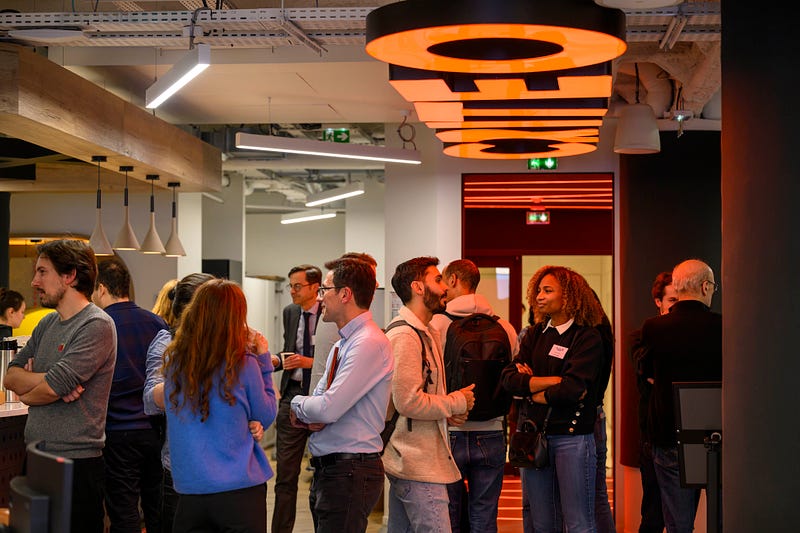
Building on our commitment to open AI research & innovation and responsible governance, the symposium gathered a diverse community to collectively examine the opportunities, risks, and technological challenges introduced by increasingly capable AI agents. The program was intentionally designed to stay both rigorous and accessible: a full day blending keynote talks, technical presentations, and panel discussions, fostering a multi-disciplinary dialogue. With a full house of more than 100 on-site attendees and even more participants online, the event sparked engaging exchanges both during the Q&A sessions, networking breaks, and around demo sessions.
The symposium was moderated by Liva Ralaivola, VP Research at Criteo and Head of the Criteo AI Lab, who guided the discussions across critical AI topics. The event was opened by Criteo’s CTO, Diarmuid Gill, who highlighted the company’s longstanding AI strategy, driving Criteo’s innovation in agentic AI.

Which path to responsible agentic AI
Panel — Michel Combot (Chief Technology, Innovation and AI Officer at CNIL), Pagona Tsormpatzoudi (SVP & Assistant General Counsel, Privacy, Data Protection & AI Governance, at Mastercard), Martin Signoux (AI policy lead Europe at OpenAI), Alice Schoenauer Sebag (AI Safety Staff member at Cohere) moderated by Nathalie Laneret (VP Government Affairs & Public Policy at Criteo).

Panelists presented how agentic AI impacted their organisations, the issues they have been facing (cyber risks, transparency, autonomy, biases…) and how they have been addressing them through appropriate governance and a multi-stakeholder approach. The CNIL explained how it is tackling AI developments from a regulatory perspective and the tools it can use to accompany organisations developing agentic AI, such as regulatory sandboxes. All panelists agreed that the current legal framework was comprehensive enough to tackle agentic AI risks, such as the GDPR, the EU AI Act, or basic liability rules, when several agents need to interact. They also stressed the need for relevant standards and international alignment.
Trust in agents: safety, privacy, and evaluation
- An update from the international AI safety report — Carina Prunkl (Researcher at Inria, Senior Research Fellow at the University of Oxford’s Institute for Ethics in AI & Lead Writer of the 2026 International AI Safety Report).
Carina shared a preview from the upcoming report showing AI abilities are rising quickly, and reminded us that no single safeguard is enough. The recommended approach is layered: use safer training data, teach systems to refuse risky requests, apply clear runtime rules, trace AI‑generated content where possible, and monitor after release to catch issues early.

- Testing agents like real products — Grégoire Mialon (Staff Research Scientist at Meta Superintelligence Lab).
New, lifelike evaluations (think booking, messaging, coordinating with others) conducted by Grégoire’s team highlighted a key point: speed and reliability matter in everyday tasks. A smaller, faster model can beat a slower “smarter” one if there is a time limit, so product tests should include time, tool use, and safety checks, not just lab scores.

Agents in practice: from industry to the open internet
- How AI assistants will change shopping — Lionel Basdevant (Product Director at Criteo), Alberto Lumbreras (Staff Researcher at Criteo).
Lionel and Alberto presented an overview of the current agentic AI revolution in e-commerce, where an agent can return products that people can actually buy right now, with up‑to‑date prices and stock, and a clear line between sponsored and organic results, as highlighted in an in-house demo. Behind the scenes, it uses retailer feeds and smart matching to keep suggestions relevant to the request, leveraging Criteo’s commerce knowledge to enhance the chatbot’s recommendations.

- Health data you can trust — Maria Teleńczuk (Senior Researcher at Owkin).
Maria explained how, in healthcare, agents can be combined with strict checks (data standards, logs, and clear summaries), so that hospitals and labs can trace every step from raw files to ready‑to‑use results, thereby reducing the safety risk and keeping workflows auditable.

- Rethinking search and recommendations — Patrick Gallinari (Professor at Sorbonne Université & Distinguished Researcher at Criteo).
Patrick explained how new AI breakthroughs can improve the technology behind search & reco for better relevance. AI models treating items as if they shared a common “language” help systems both find and rank what people need, even across very large catalogs.

Agents in the future: from software agents to physical AI
- Natural language as the agentic way to build software — Ludovic Denoyer (Scientific Director at IMEC).
Modern AI lets us use everyday language to tell these systems what we want, but we force them to fit into old, click‑heavy and ill-adapted tools like protocols / APIs. Ludovic advocated that new agents should not be limited to these artefacts and instead redesign software through the use of natural language.

- World models — Patrick Pérez (Chief Executive Officer at Kyutai).
Patrick introduced the main horizon in agentic AI: how robots and autonomous systems could combine perception with language, and learn from examples and practice, to create their own representation of the world. This world model approach is pushing progress in driving, dexterous manipulation, planning, and much more.

Institutional perspectives
- Incentivizing AI research — Vanina Paoli-Gagin (French MP, Sénateur de l’Aube) provided concrete solutions to promote AI research in France, such as accelerating lab-to-market, reinstating the “Young Doctors” program, redistributing the research tax credit, establishing a European engineering degree and increasing public-private partnerships with the mantra “Search! Baby Search!”.

- Towards inclusive and sustainable AI development — Anne Bouverot (France’s Special Envoy for AI, Chairperson of Ecole Normale Supérieure, Co-Chair of France’s AI & Digital Council) closed the day with Liva Ralaivola through an energizing and inspiring fireside chat from looking back at her career as a woman in AI to looking ahead at the most promising advances in agentic AI. She also stressed the need to invest in sustainable AI, to enter into international partnerships, and to not forget education in AI, including ensuring a balanced mix of profiles in AI development.

We would like to wholeheartedly thank all our invited speakers who made this event possible, our formidable attendees and everyone who helped us organize this event. For those who could not join us, we will soon share additional resources to catch up. In any case… See you next year for another symposium!

Organizing team
- Marieke Buis, Senior PR & Communication Manager France;
- Maxime Droulez, Global Privacy Counsel;
- Kini Engelmo Moriche, Staff Developer Relations Engineer;
- Jean-Yves Franceschi, Staff Researcher;
- Nathalie Laneret, VP Government Affairs & Public Policy;
- Dainora Magnier, R&D Support Coordinator;
- Mariia Vladimirova, Senior Researcher;
- Jerome Baudet, Staff Data Center Engineer & Great photographer!