








At Criteo, Engineering Program Managers (EPMs) sit at the heart of our most complex, cross-team initiatives. We connect business ambition with technical reality, helping engineering teams ship impactful products at scale. In this article, three EPMs share what the role really looks like, why we love it, and how your career can grow in this path.
If you ask ten people what an EPM does, you’ll probably get ten different answers… So let us explain our vision of the EPM role: what we do (and don’t), why so many of us love this job, and how the role can evolve over time.
What is an EPM at Criteo?
At Criteo, we’ve been working hard to define this role more clearly. In this section, we’ll explain who we are, how we work, and what we are actually doing.
Who are we?
EPMs are part of Criteo Technology, led by the CTO. They are embedded in engineering domains (e.g., Infra/Platform, Security, Product functional areas such as campaign management or audience) or transversal programs (e.g., AI, agentic commerce). Our main goal is to deliver our projects efficiently, and to do so, we must facilitate and work in close partnership with:
- Product Managers (PMs) — who translate an idea into a product vision.
- Engineering Managers (EMG) / Dev Leads/Devs — who own the technical strategy, the product building.
- other EPMs — who own how it all comes together and actually ship
- Functional teams (Legal, Sales, Finance, …)– Who support our client operations (rollout strategy, sales enablement, compliance, data analysis…)
A simple way to think about it: EPM is the heartbeat of a program, connecting tissue between business intent, technical reality, and execution at scale.
How do we work?
We use a shared mission statement for the EPM team at Criteo:
Our mission is to drive valuable outcomes from complex engineering projects and programs, and improve the delivery of R&D, while supporting Product and Engineering.
This is a catchy phrase, but in practice, this means:
- Turning fuzzy ideas into scoped, phased programs that teams can execute
- Making sure dependencies, risks, and trade‑offs are surfaced and handled early
- Ensuring delivery flows are as simple and efficient as possible (reducing friction, hand‑offs, and noise)
- Measuring and communicating outcomes, not just activity (e.g., revenue impact, time saved, quality improvements)

In our role, we consistently keep 3 pillars in mind:
Projects / Delivery — Making sure complex initiatives are correctly shipped by:
- Clarifying scope, dependencies, and success criteria.
- Designing the delivery plan: phasing, milestones, critical path, anticipating challenges and risks early, and preparing mitigation plans.
- Coordinating execution across teams, managing constraints (time, resources, scope), and adapting plans as reality changes constantly.
- Communicating progress, risks, and changes with as much transparency as possible.
Best Practices & Processes — Acting as “guardians of the temple” for key R&D processes with a pragmatic approach by:
- Supporting and improving rituals like project kick‑offs, technical architecture validation, and quarterly preparation/planning.
- Helping teams pick and evolve ways of working (Scrum, Kanban, hybrid) that actually serve them, rather than forcing a one‑size‑fits‑all model.
- Continuously refining our operating model: processes should serve the teams, not the other way around.
Influence and collaboration — Aligning all the stakeholders to move in the same direction by:
- Providing a neutral, program‑first view when priorities collide.
- Sometimes, saying “not yet” or “not this” (always backed by actual capacity and risk data) when everything can’t fit at once.
- Keeping alignment across Product, Tech, and Go‑to‑Market so that increased velocity doesn’t just produce more chaos.
What concretely do we do(n’t)
People we work with often mix up what we do and what we don’t do. Let us clarify what people think we do and what we actually do.
🚩️ “EPMs manage people.”
✅ We lead through influence and partner with managers. BUT EMG/Devleads are managing the people.
🚩️ “EPMs write code and define technical architectures.”
✅ We take part in technical discussions and ask probing questions (sometimes “annoying” but always necessary) to strengthen the shared understanding between Product and Engineering and to ensure consistency at the company level. We don’t write production code, but we do speak the engineers’ language: most EPMs have an engineering background (though it’s not mandatory), which allows us to challenge plans and identify risks. BUT, development teams own the technical decisions, and Product Managers own the product features.
🚩️ “EPMs are like Scrum masters, they plan and organize our teamwork”.
✅ Teams can use Scrum or Kanban, and some ceremonies overlap. BUT we focus on end‑to‑end program outcomes, not on running every daily for a single squad.
🚩️ “EPMs prioritize for the company.”
✅ We frame trade‑offs, expose dependencies, and highlight constraints. We often challenge prioritization or roadmap assumptions when they clash with capacity or reality. BUT PMs and Dev Leads own their roadmaps and the final calls.
🚩️ “EPMs defend only R&D or product interests.”
✅ We must take a step back and see the big picture outside of Product or R&D point of view to deliver the best possible outcomes for Criteo.
🚩️ “EPMs must be in all the decision meetings, and everything must be validated by us.”
✅ We don’t want all information and decisions to be funneled “through the EPM.” We push for open channels and direct conversations between the people who actually do the work.

Why we love our job
Given all this complexity and ambiguity, why do people stay in EPM roles and genuinely enjoy them?
One of the main reasons is the diversity. No two programs look the same. When you take a look at the different projects the 3 of us have been working on, those are completely different with different technical topics, product and business goals, and stakeholders:
- Criteo GO: Our new self-service platform that enables small businesses to launch and optimize effective digital ad campaigns in minutes.
- Audience Agent: A new way of interacting with audience data, leveraging emerging agentic systems to make complex workflows more intuitive and automated — Which we’ll deep-dive in another post.
- Datacenter migration: The opening of a new air-cooled datacenter room in Dallas, aligned with updated DC standards, improves efficiency and paves the way for advanced technologies such as densified infrastructure. We’ll explore this topic in a future post.
Another reason is the dynamism and the daily challenges. We never get bored. We’re often brought in when everything is moving at once (priorities, constraints, and expectations) and there’s no obvious path forward, which is exactly what makes the work engaging. If we can give you examples, we have to:
- Deal with ambiguity: We’re often pulled in when something is clearly important, but nobody has yet turned it into a clear objective, scope, and plan. Our job is to take that fuzzy idea and work with stakeholders to turn it into something concrete that teams can actually build and deliver.
- Manage the constraints: Capacity versus ambition, tech debt, compliance, client commitments, market windows. Quarter preparation at Criteo, deciding what actually fits in the next quarter, can be a roller coaster. It is essentially a structured conversation about finding the right balance between trade‑offs.
- Lead through influence, no formal authority: We don’t manage people, and we don’t sign off on roadmaps. Instead, we help shape how programs are defined, sliced, and delivered, and we’re expected to speak up when something needs to be reshaped or even stopped.
And finally, we love our job also because of Criteo’s culture: a collaborative, supportive, and learning-oriented environment where we get to work with smart people who are willing to share, challenge, and grow together.
What can I become when I grow old?
Who becomes an EPM?
Whether you started as an engineer, a PM, or a project/program manager is finally secondary. The specific path you took matters less than the skills and mindset you bring.
What really makes someone effective as an EPM at Criteo is a mix of:
- Systems thinking: being comfortable with complexity, dependencies, and trade-offs.
- Structured communication: turning messy reality into clear narratives and actionable plans.
- Bias to action: driving progress instead of staying on the sidelines.
- Resilience and curiosity: sticking with tough problems and wanting to understand how things really work.
- Technical knowledge: understanding engineering concepts well enough to follow technical discussions, challenge plans, and spot risks.
What can I do then?
Once you’re in the role, the natural next question is: what does growth look like if I stay an EPM? Or should I try something else? The good news is that both scenarios are possible.

Growing within the EPM path
If you choose to stay in the EPM craft, you can build a long, rich career without changing jobs entirely — your scope, impact, and challenges simply grow over time. Instead of running a single project in one product area, you gradually move to larger, more complex programs and portfolios that span multiple teams and connect to company-level priorities, not just one product.
As you progress, the challenges also evolve:
- Functional and technical: deeper product and tech topics, more complex systems, tougher trade-offs.
- Operational: heavier coordination, higher stakes, more critical communication and reporting, especially on initiatives closely followed by leadership.
With seniority, we’ll also expect you to share your experience by mentoring other EPMs and ICs, and by supporting EMGs/Devleads on program practices.
Moving beyond EPM
And if, at some point, you want to move beyond the EPM role itself, the skills you’ve built can easily be reused in several roles:
- Product Management. If you’re drawn toward owning the “why” and “what” — problem definition, value, customer outcomes — your EPM background in execution and cross‑team alignment is a strong foundation.
- Engineering Management / Tech Leadership. If you want to lead teams directly and own technical direction, you already understand capacity, dependencies, risk, and how to make complex work deliverable.
- Org / Strategy / Business Ops. If you love planning, prioritization, and portfolio‑level thinking, there are paths into roles focused on how we invest, how we plan across time horizons, and how we evolve our operating model.
- Domain leadership. Some EPMs go deep into a space (e.g., infra, AI, security, data, commerce experiences) and evolve into leaders whose job mixes domain strategy with strong program orchestration.
The point isn’t that EPM is “just a stepping stone”. It’s that:
Being an EPM builds a rare mix of strategic thinking, execution craft, and cross‑functional influence that keeps a lot of doors open. You can stay and deepen your craft, or you can pivot when the right opportunity appears — without starting from scratch.
If we had to summarize in short words, we are not always in the spotlight, but if you look behind most large, cross‑team successes in Product & Technology, you’ll usually find an EPM somewhere in the middle asking the awkward questions, mapping the dependencies, making risks visible, nudging decisions forward, and quietly making sure the whole thing actually works. And for those of us who love seeing the whole system, connecting dots, and getting things done and done right, then this job is made for you.
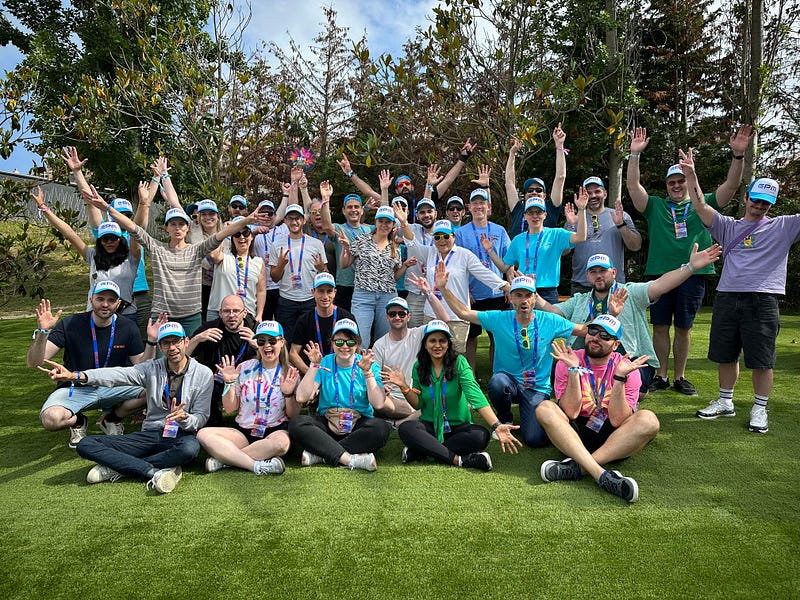
The three of us who worked on this article genuinely love what we do. Even if the day‑to‑day isn’t always easy, we feel we’re in a unique position: close enough to the functional side of Criteo to understand the business, and close enough to the technical side to enjoy the engineering challenges that come with it. We rarely get bored, and we have the chance to work with great teams in a great atmosphere.
If this article inspires you and sounds like the kind of challenge you’d enjoy, keep an eye on EPM opportunities on our careers page 👇
Your next adventure awaits!
Explore new opportunities at Criteo. Browse our list of open jobs and see if you can find one matching your skillset…
careers.criteo.com