







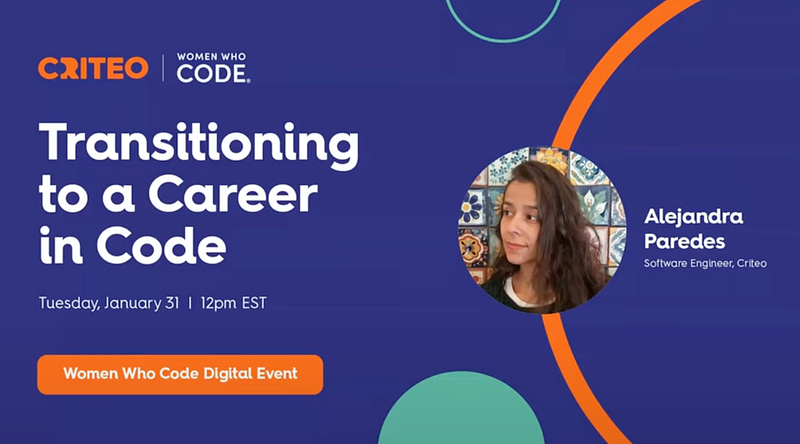
We spend so much time in our jobs. Society evolved to put work at the center of everything. We dedicate at least eight hours of our day, five days a week, to work. We need to choose our major when we are 18 years old. Sometimes people are lucky and find their call right away; other times, our tastes and interests evolve, and we start thinking: What if I can do something else? That is kind of what happened to me.
I HAD TOO MANY QUESTIONS when I started considering switching careers to programming. How much maths do I need to know? How many times do I need to install Windows? What if I don’t understand the tasks or how to solve issues? I was scared that my skills were too far from what was needed to jump into a world that overwhelmed me most of the time. Hopefully, I was reassured with simple answers:
- The typical math skills you need are: adding, subtracting, multiplying, and what modulo means (from Wikipedia: the modulo operation returns the remainder or signed remainder of a division)
- You don’t need to do anything with Windows because you can code with your Mac or Linux.
- You won’t be alone; you can always ask your teammates where to start.

So, I took that first step to transition into a career in coding. It wasn’t instant love, I don’t feel passionate about coding, but that doesn’t matter because somewhere in the world, there is a server with a piece of code with my signature on it.
I studied for two years for my master’s degree in computer science. At the same time, I was in an apprenticeship contract (studying and working simultaneously). At the beginning of my job search, I hid the fact that I used to be a product owner. I didn’t want to be automatically selected for positions that mainly required communication and marketing but that promised “we’ll find something for you to code”.
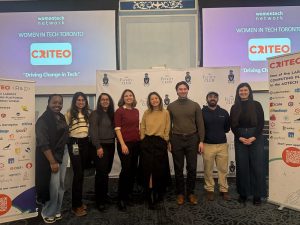
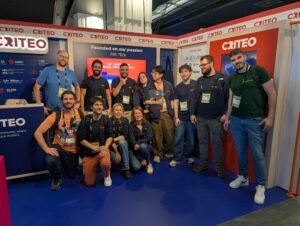
I finished school and started looking for my first job as a developer. When I arrived for my interview in Criteo, I talked about my motivation. I discussed the importance of speaking with product teams and my strengths when explaining technical concepts to non-technical people. People in professional retraining are different kinds of juniors. We didn’t learn to code as teenager, but we are seniors in many other skills.

Today, I dare to defy convention, I do not fit in the repetitive pattern of what a typical developer is supposed to be (shy, with the hoodie and the beard), but I still can write good, sustainable and efficient code. It took me a lot of crying nights, thinking I could not do it, and finding ways to take away the frustration, but I did it. Today, I am a Software Engineer Developer at Criteo. With my background and profile, some people still ask me if I really want to code, if it’s really made for me, if maybe I wouldn’t be better off being a Project Manager. But I’m still here, coding and defying conventions.