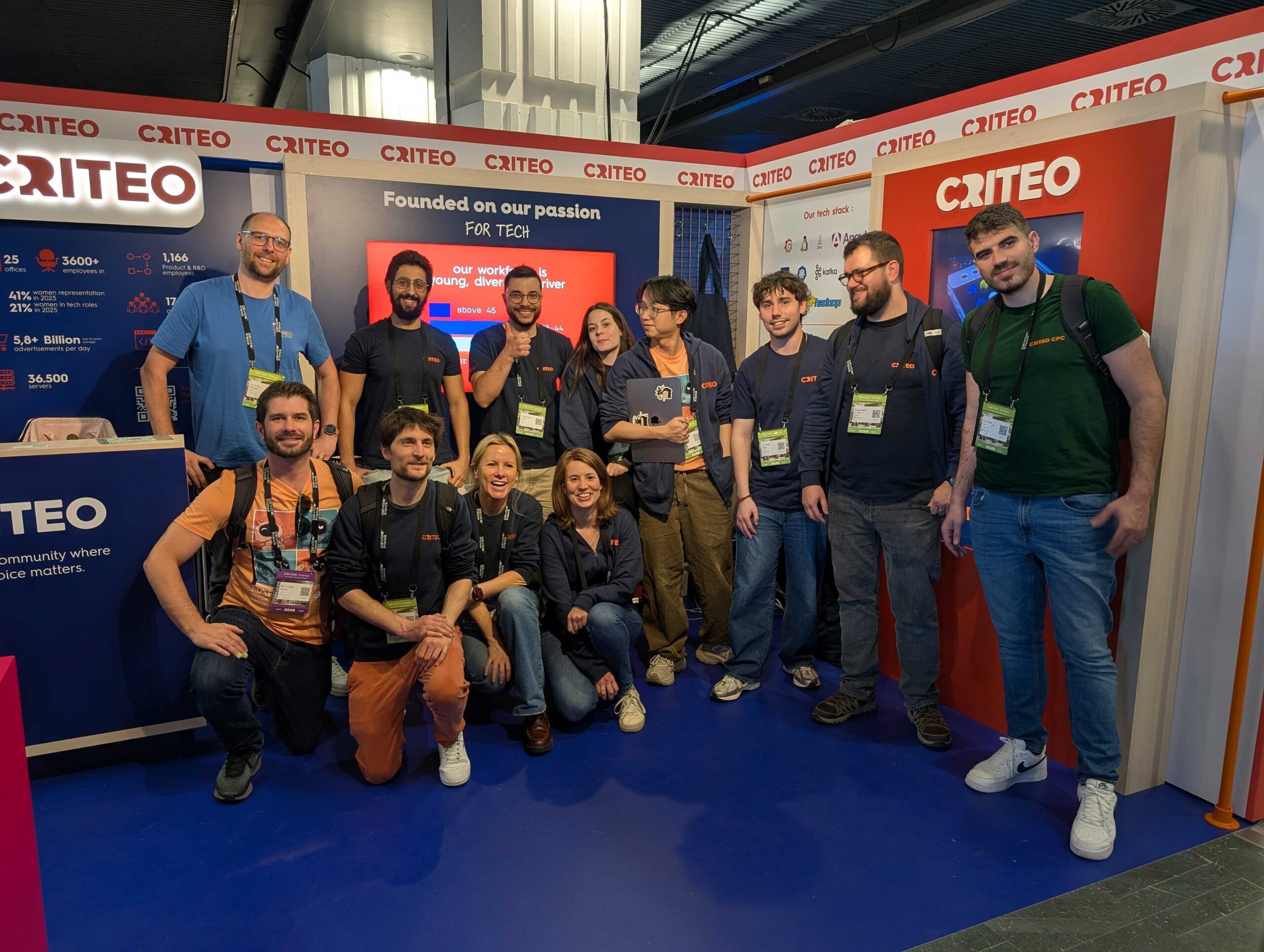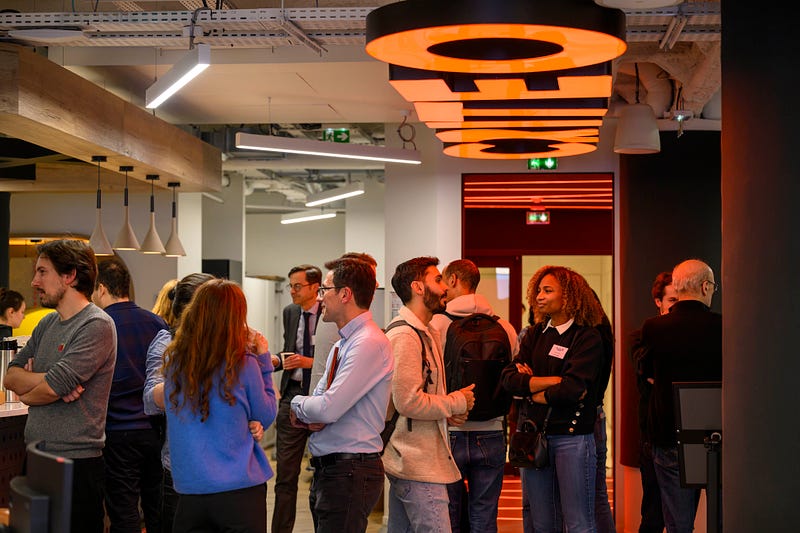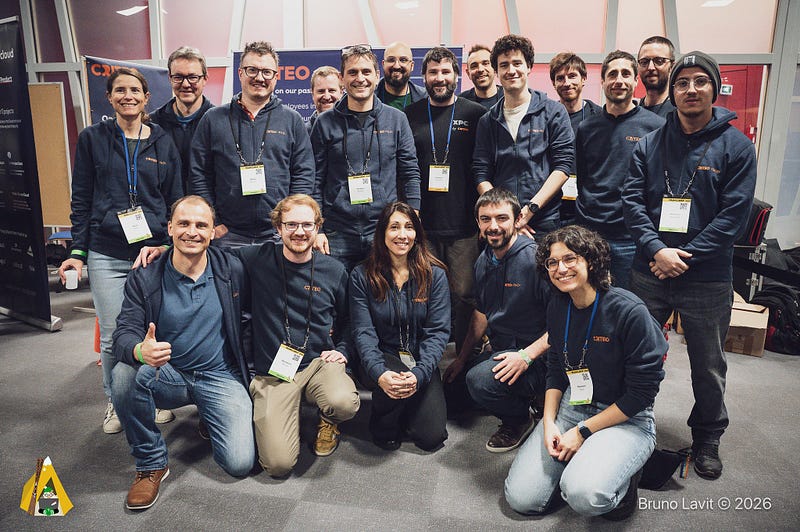


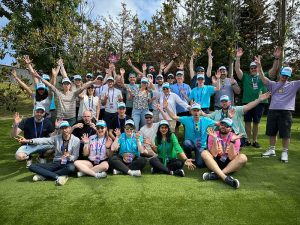






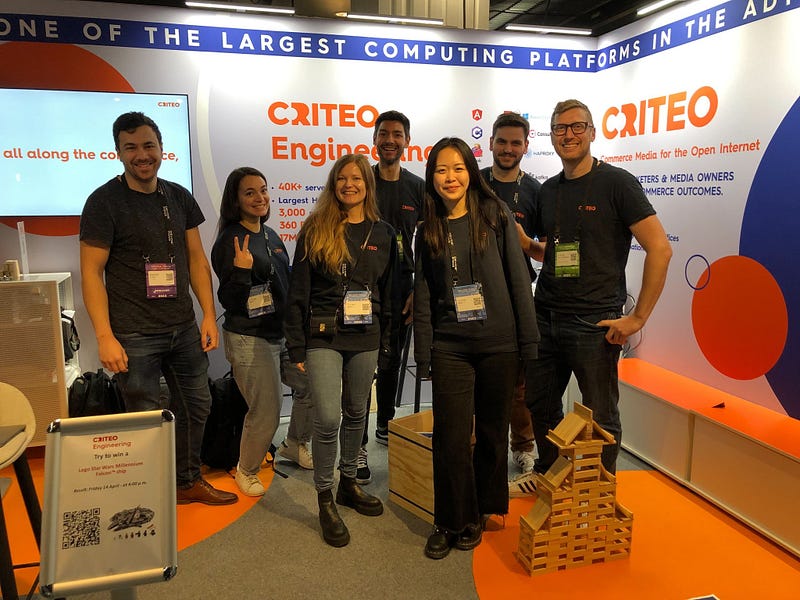
Devoxx France is one of the largest and most prestigious events of the year in France for information technology and software development enthusiasts. This year, the event attracted over 3,000 developers, engineers, and technology experts worldwide, making it one of the largest events of its kind.
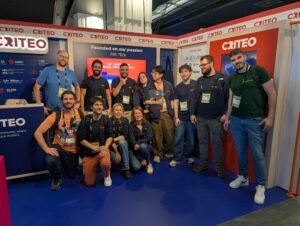
As a sponsor of Devoxx France 2023, our team had the opportunity to meet industry experts, share knowledge, and learn about the latest trends and innovations. Throughout the three-day event, more than 250 talks and workshops were organized on topics ranging from programming methodologies and Rust to database systems and zero trust architectures.

Our speakers at DevoxxFR 2023
Before jumping to our takeaways, we want to give a shout-out to our two speakers in this latest edition. 👏
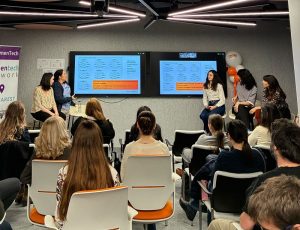
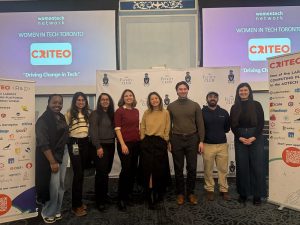
Pooneh Mokari, an SRE working in the Identity and Access Management team at Criteo, talked about “Women’s journey in tech”. It was a very inspirational talk based on how tech companies can change their environment by attracting more women and making the future of tech more diverse. She truly believes that sharing our lived experiences as women is valuable as a way of describing the situation and can make the tech environment more diverse than before. 💜

Raphaël Blemus, a software engineer working in the Users, Communications and Logs team, talked about how to keep your job as long as possible. Sounds intriguing, right? He shared a set of skills and techniques / cognitive biases to make you irreplaceable, or to allow you to flush out people using these techniques. 👀

Takeaways from Criteos
In addition to attending these inspiring talks, Criteo also had the opportunity to participate in product demonstrations and network with other professionals in the industry. Many speakers enjoyed presenting an answer from ChatGPT instead of quoting Wikipedia. Even the organizers (dressed in red coats as usual) revealed during the “Cast codeur” podcast having used generative AI to prepare all materials for the conference: music, trailer, slides, drawings, and so on.

We took valuable notes and information on the latest trends and best practices in software development. We’re excited to share our takeaways from Devoxx France 2023 with you in this article.
Gilles Legoux’s highlight: “Generative AI”
During this edition, one very interesting session for keeping track of new tech was “Understanding and Using AI Language Models” by Sébastien Collet, a three-hour workshop accessible to all (albeit in French). As a software engineer in data science and machine learning, it was great to have a high-level summary and take a step back to re-examine the last few years’ evolution of the deep learning ecosystem.
Let me summarize it by consolidating and restructuring it with some external sources.
Building a generalist AI chatbot is the most complex challenge for a technology aiming to simulate human intelligence. They are experiencing dazzling success with the release of ChatGPT.
Thanks to Large Language Models (LLMs) working with Generative AI and language modeling, chatbots continue to get closer to their objective of simulating human intelligence, even though the way ahead is still long. From instructions, you can initiate a coherent and universal dialogue with the machine. The number of LLMs has continued to increase since 2018, with this accelerated timeline at the beginning of the year 2023:

These models are based on deep learning and have power law complexity in terms of model size (number of parameters) and training dataset size (number of data rows) up to billions/trillions of parameters and data rows, and number FLOPS/days for the training. Experimental scaling laws try to evaluate the coupling between these resources: model size, dataset size, and compute. Also, challenges are to deploy models at scale to serve billions/trillions of users and queries (high-throughput) with an acceptable web latency in milliseconds/seconds (low-latency) on tens of thousands of servers.
These multi-task generalized models can solve specialized tasks with performance sometimes better than specialized models but with additional costs. They can even beat humans on exams, thanks to previously emergent abilities, that are not forecasted during their training.
The open-source community has accumulated an estimated delay of around six months to one year. The gap may continue increasing in the future. Recent and more performant models are publicly available but are all closed-source projects, based on modified open-source projects.

The LLMs models have limitations with hallucinations, where the model alignment is imperfect, despite corrections with Reinforcement Learning from Human Feedback (RLHF) approaches. So a hacker can hijack the chatbot’s behavior to act maliciously with jailbreaking skills relatively easily. Examples include phishing, generating fake news, and obtaining private data, raising problems of data privacy, ethics, and security.
The simulation of the reasoning capacity is related to the number of parameters, which is costly and hazardous. The simulation of the reasoning capacity is associated with the model size. LLMs are not good at logical and mathematical problems. Also, when released, the LLM is not trained on fresh data due to the long training duration (several weeks/months), and the predictions can be out-of-date or unaware of recent changes or news.
The ecosystem is young and continues to be improved and regulated. New projects keep appearing, with Toolformer by Meta AI, ReAct by Google AI, ChatGPT+ with plugins by OpenAI, and Auto-GPT consolidating the existing ecosystem.
For more details about performance at scale, scaling laws, emergent abilities, the economic and technological race, and the augmented LLMs, see my complete article: History of the Generative AI. You can use open-source projects to use it by yourself.
Harold Dost’s favorite: “FoundationDB: The best kept secret of new distributed architectures! by Steven & Pierre”
As a long-time conference goer but first timer for any Devoxx, particularly Devoxx France, I found the conference a delightful experience. There were many great topics with varying levels for people of all skill levels. As in many big conferences, the organizers and committee reviewers put in a lot of good work on selecting and facilitating the event. The pure amount of developers is always great, and allowed for some interesting discussions around developer experience and methodologies for improving over time. I’ll defer to Miguel’s section for a dive into that.

For my part much of my interest, even if complementary, comes from a slightly different angle. Trying to focus on the performance. Within Criteo I work in the Observability team, which as it sounds circles around monitoring and understanding the performance of our applications, SDKs, and services. We provide those tools to our developers. However, we also want the monitoring systems which our users are using to perform well.
FoundationDB is an open source project powering a number of companies including the original creators, Apple. It’s an ACID compliant database that scales, and powers things like iCloud sync. One of the areas, as it’s Key Value based, that maps well is things like time series storage. I could imagine an application which implements an interface over the top to support something like Prometheus ingestion. And from my initial searching, someone’s at a minimum experimented with an M3DB POC already.
There are many projects out there supporting Prometheus remote_write. This is often constrained with negative impacts on things like backfilling of data. The trade-off is that in many cases these systems are prioritizing storage size. There are systems where having backfilling is more of a priority, and storage space isn’t the biggest factor. Warp 10 already supports using FoundationDB as the backing database, so it’s certainly feasible to provide such a TSDB, but its use cases are not necessarily the same.
Having all of this while still being able to query quickly and effectively is tempting, and maybe in the future a necessity at Criteo.
Henry Lagarde’s favorite topic: Clean as You Code
Henry enjoyed his first time at Devoxx and was quite amazed by the energy from all the participants. Every person (speakers, attendees, sponsors or organizers) was there to make this moment memorable. The spectrum of the topics and the quality of the speakers allowed everyone to understand and dive into new topics even though you had never heard about them.

I came to Devoxx France in order to learn new methodologies and best practices that well-known companies such as Sonar were providing. Concepts such as Domain Driven Development (DDD) or Quality Gates that are not always applied within Criteo can really ease the development cycle by better understanding Product needs or facilitating knowledge sharing between teammates.
These topics are in fact really tight since they will allow our codebase to be more reliable in the future thanks to the concept of “Clean as you code” — talk by Nolwenn and Marco. We will be able to maintain and continue to release new features while removing technical debt that could be a blocker in the future. DDD, along with the Quality Gate provided by SonarQube, could help us to detect and solve issues before they appear in production (security issues, bad patterns etc).
The next steps after these conferences are always to try to apply them before we forget these key concepts.
Miguel Liroz’s takeaways
This was my first participation in Devoxx France and the experience was very positive. There were plenty of interesting talks, most of them going beyond specific problems and contributing to general discussions within the developer community. The choice is big enough that you can select two or three themes and fill the whole conference with talks around them.
One of the topics I was most interested in is developer experience, and the first talk I attended, “Developer Productivity Engineering” (DPE) by Justin Reock, very much set up the tone for it. I have been working for several years with different teams in the Factory group, which is very much our core team doing DPE at Criteo. We have developed a very good sense of the importance of the dev experience and having all these concepts detailed, even with similar but slightly different terms, was very enlightening. The talk was divided into two parts, a first theoretical part, where many concepts and references were mentioned, and a second one on how in practice this can be carried out on the build, test, and CI/CD pipelines.

The main outcomes of DPE are to speed up feedback cycles, expose more reliable and actionable data, and provide a highly satisfying dev experience. Indeed, within the factory group we dedicate big efforts to accelerate feedback cycles, ranging from traditional action points, such as build, test or CI/CD improvements, to more specific use cases, such as data production, where we have heavily invested in recent years to provide a great data dev experience at all phases of the dev cycle. Using build caches or test distribution are techniques that we already employ at Criteo to accelerate development, but I was not aware of more advanced techniques such as Predictive Test Selection. I was also persuaded about the importance of data analytics to guarantee performance continuity. Having actionable data is fundamental to identify points that need attention from our group. In fact, apart from direct dev-related metrics, in Criteo, we have started to collect more general metrics on developer productivity using the SPACE framework. Having a global exposure to all those metrics will be very useful not only to DPEs that work on improving them, but to the whole developer community of the company.
I would not like to end my takeaways without mentioning another hot topic that was addressed in several talks: the new possibilities that are enabled by generative AI (OpenAI ChatGPT, GitHub CoPilot) and how this could be leveraged in software development. Indeed, this is something that we are looking into very closely, as the impact it can have on developer productivity can be disruptive.
Emmanuel Guérin’s favorite topic: Conway’s law
Last week was my first participation in Devoxx, but I was really impressed by the breadth of topics that were covered by the different talks. Even if this conference started as a spinoff of the Paris Java User group in 2012, you could also find plenty of other topics to chew on during these three days.

Since my recent discussions at Criteo have been around our architecture, I was particularly interested in Julien Topçu’s talk about Conway’s law. In a very colorful presentation, he reminded the audience of this well-known notion proposed by a programmer in 1967:
“Any organization that designs a system will produce a design whose structure is a copy of the organization’s communication structure”.
Beginning his talk by illustrating how the effects of this law can be seen on the website of a famous consulting company, Julien continues with other striking examples found in various emblematic projects. He then goes on to introduce ways a company can navigate its way around the law to avoid its potentially negative impacts.
A second speaker that gave me this eureka moment of “I had never heard it put that way before” was Benjamin Bayart. His talk was titled “Geopolitics of data”, and was about the different facets of data regulation, and the power it gives to the countries that enforce them. There were many things in his talk that I would encourage you to watch when it is available, but one that struck me was: “The computer is fatal”.
What Benjamin means is not that a computer is deadly. It means that, once a decision is made in computer software that only 2 values are possible for something, any other value stops to exist in the real world. One particular vivid example of that is character sets: if the encoding doesn’t include “É”, then it simply doesn’t exist. Which probably is why my ID papers never show the same spelling for my last name.
This was the kind of talk where you can go back to George Orwell’s writing in 1984 about how the creation of “newspeak” can allow a society to forget about problematic notions. I hope that you’ll remember this the next time you decide on the type of a variable!
S.C.’s highlight: How best to keep track of technological developments

My favourite talk for this Devoxx edition was “Voyage au centre de la Veille: Apprendre en continu avec sa veille technologique” by Fabien Hiegel and David Franck. It was an insightful talk on how best to keep track of technological developments. In French we call this “veille technologique”, or “tech watch”.
There are two types of tech watch:
- the strategic tech watch, done by the company to get information for decisionmakers;
- and the personal tech watch, done to better one’s own skills.
There are three important steps in an efficient tech watch practice :
- sourcing information: find blogs, podcasts, and tech newspapers that are relevant to your needs,
- processing information: the speakers really underline how necessary it is to take notes on the content (this means always rewording rather than copying bits of the content).
The notes taken should act as a second brain (see the book “Building a Second Brain” by Tiago Forte) that you can reference. The speaker recommended having small, atomic, notes that are decontextualized from the piece of content they originate from, with only one concept per note. You can have multiple notes per article you read, or you can just add onto an existing one if there was only one concept that was already a note in your folder. It is preferable to have a small corpus of brief notes that you are keeping up-to-date and connecting to your newer entries.
You may then use the Zettelkasten method to organize notes, by creating connections between notes; some software allows you to see the backlinks that point to a specific note as well as the link a note is pointing towards. This is really good for structuring your knowledge.
Much different software exists for efficient note taking, you can consult note-taking NoteApps.info: 32 best note taking apps analyzed over 289 features to compare them to your needs.
You can also refer to the book “How to take smart notes” by S. Ahrens, and the first part of “How to make notes and write” by Dan Allosso. - Now you need to make the most value out of your tech watch practice : a good tech watch practice will enable you to keep learning, to innovate and to experiment.
It can be valuable to form habits around your tech watch (see the book “Atomic Habits” by James Clear on how to form good habits):

- this can be done by a “Good Morning Learning” : taking 30 min every day within the team where for 20 min everyone goes and does their solo tech watch and then for 10 minutes all the teammates individually sum up what they’ve learned to the team
- this could also be Xtreme Reading: for one hour, a team of n people chooses n/2 books. For 20 minutes, person A reads content 1 and person B content 2, then they switch in pairs of two, and then for 10 minutes all the pairs sum up the knowledge acquired. This is good because people might take different points away from the same source.
All in all, having a good tech watch practice is good for the employee as well as the company, as it creates a high-performing culture (see the book “Accelerate” by Nicole Forsgren, Jez Humble, and Gene Kim).

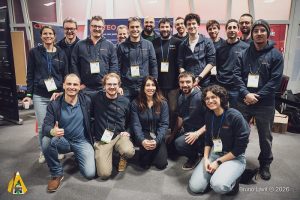
In conclusion, Devoxx France 2023 was an incredible experience for our team, and we’re grateful for the opportunity to have sponsored this event. We’re excited to share the knowledge and insights we gained from the conferences and networking opportunities with our colleagues and clients.
We want to express our sincerest thanks to the organizers of Devoxx France 2023 for putting together such an outstanding event. The dedication, hard work, and attention to detail that made this event a success did not go unnoticed. We appreciate the effort that went into organizing such a large-scale event and are grateful for the opportunity to have been a part of it.
We look forward to attending future editions and hope to continue supporting and contributing to the technology industry’s growth and success. Thanks again to the organizers and everyone involved in making Devoxx France 2023 an unforgettable experience!