






Public orators have played a major role in spreading knowledge and driving progress since the early days of oratory in Ancient Greece. I’ve always been fascinated by speakers’ unique ability to catch an entire audience’s attention and how they turn messages into valuable takeaways that stick with you long after their speech is done.
If there’s one thing I’ve learned throughout my journey as a tech speaker is that knowledge doesn’t just depend on the message you want to deliver; Knowledge happens when you get people to hear it. This is even more true in today’s world. Current society is marked by constant information, and the rise of AI is accelerating and reshaping the way we gain knowledge. In a world where accessing knowledge has never been easier, we might question how relevant speakers still are…
But that’s the trick, isn’t it? We’re surrounded by this ocean of noise everywhere we go, so if you don’t want your message to get lost, you need the right voice to carry it. That’s the reason for this article on why tech speakers are still relevant today to drive progress in tech — and beyond.
Stage one: Powering through
They say that any time you learn something new, you go through the same process; a learning curve consisting of 4 distinctive stages:
- Stage 1: You don’t know that you don’t know it, meaning that you’re still unaware of your own biases, triggers, and blockers. So, your only option is to power through.
- Stage 2: You know that you didn’t know it. You become aware of those limitations.
- Stage 3: You know that you know it. That’s when learning happens. You gain experience and start to improve.
- Stage 4: You no longer know that you know it. You now have integrated the right reflexes, and you do them automatically without even thinking about it. Now, you’re ready to get the point of all this.
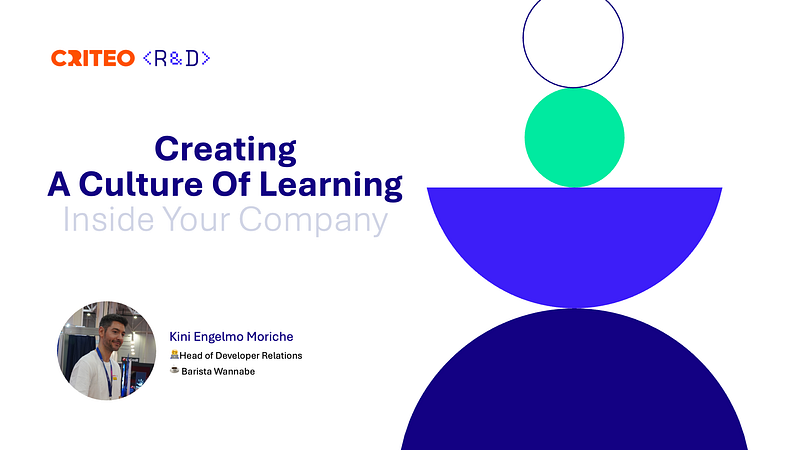
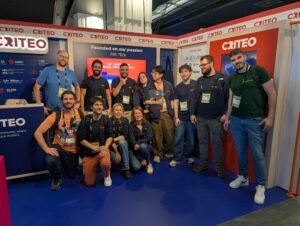
So, let’s rewind the tape to stage one, when I first stepped into the tech speakers’ game. During a work visit in Paris, I met Kini, our Head of Developer Relations, who emphasized how important it was to have tech experts spread knowledge and make our community more visible in and out of Criteo. He was talking about diverse ways in which we could all contribute, like writing tech articles, hosting meetups, and giving public talks. Back then, I remember thinking, “I don’t know who will accept such a challenge…”
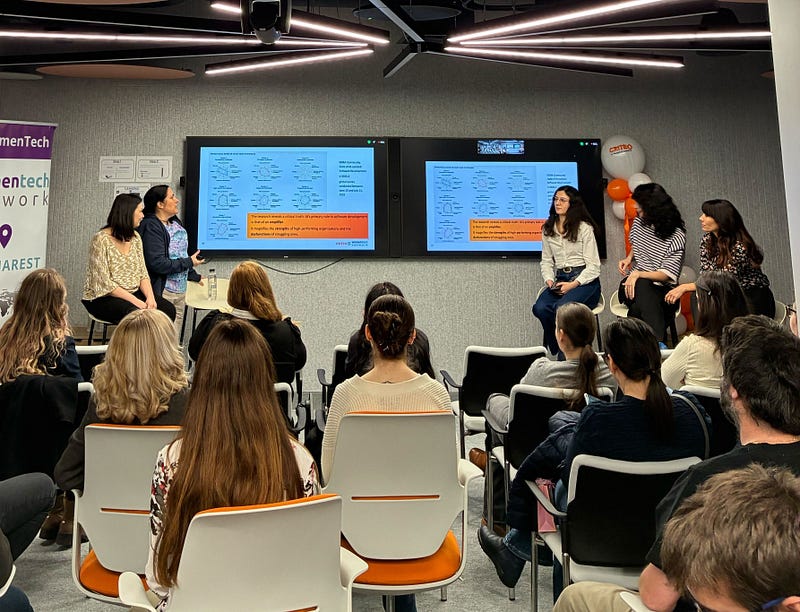
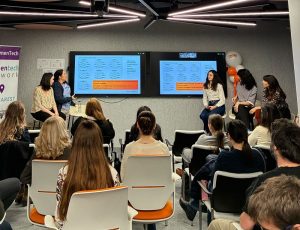
A few months later, Voxxed Days 2025 came and, as we wanted to make ourselves known in Bucharest, one of our Dev Leads, Benjamin Degerbaix, agreed to give a talk on stage. He still needed someone else up there with him though, so, despite my insecurities, I volunteered. The goal was to introduce attendees to the world of Adtech, how we work at Criteo, and how we manage super busy times like Black Fridays from a technical standpoint. Even though I had worked on the content repeatedly with Benjamin and practiced it with Kini’s support, I felt like a total mess up there. My voice was trembling, and I couldn’t bring myself to breathe better. I remember I constantly ran out of air. But I went on, with my eyes fixed on the audience. There, I spotted familiar faces smiling back at me, which helped me to power through.

Their encouragement made a real difference for me; yet another example of how much community matters for your own growth.
Stage two: Becoming aware
Going down from there, I realized how poorly my voice sounded and how hard it was for me to breathe peacefully when fear stroke. There was only room for improvement from that point on.
I felt like I had just climbed a mountain. Was it worth it? Oh, absolutely! The view from the top was just breathtaking. We always want to master things, but there is real room to grow further when switching back to a beginner’s mind. You must accept that learning those things doesn’t happen overnight; You grow into them.
Lesson learned: No matter how much you stumble along the way or how much you need to learn still, learning always makes things more exciting — at least, for me.
Stage three: Growing into it
If public speaking might feel like an innate skill in some people, it’s like any other skill. You can learn it, nurture it, and finally master it.
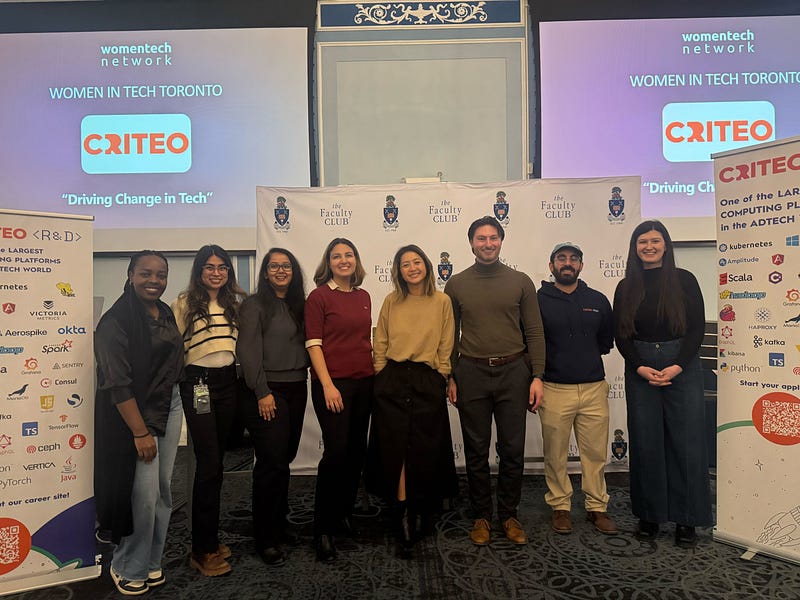
That was my mindset when I agreed, later on, to join my colleague Catalin Stan on stage at Devcon to discuss developer environments from a DevOps versus Developer perspective. This time, I didn’t hesitate. I think I was rid of the fear of the unknown also. I know what troubled me the first time was my breathing patterns, and this time, I knew what I was getting myself into, so I practiced being mindful of my breathing while speaking. I found abdominal breathing to be the key here! It’s no mystery, but we’re so disconnected sometimes that breathing can end up feeling like rocket science.

Devcon was an upgrade compared to my first time on stage at VoxxedDays. I could feel it the way I spoke and how naturally I moved on stage. As I said, you grow into those things.
Stage four: Getting the point
Soon after Devcon, I was asked to present again, but this time internationally for Codemotion Madrid. This turned out to be a huge step forward for me. Why? Well, for starters, I was to be alone on stage for the first time. The talk would be longer too (45 minutes just for myself versus 30 minutes shared with a co-speaker) and there would be no familiar faces in the audience.
The talk was about the architecture of the AdTech ecosystem. I was very nervous to be alone on stage, but then it hit me: I could draw from my previous experiences. I then remembered that it’s fine and actually relevant to take breaks between sentences. It allows the information to sink in and your audience can follow your thought process more naturally. I remember placing my bottle of water on the side to remind me of that. I went on stage and did my thing. It was only after finishing my talk that I realized it: not once had I run out of air. Shoutout to me! I was now rid of my own technical difficulties and had just reached the 4th stage of learning: managing to control my breath while speaking, without thinking about it.
The room was full, and many participants showed curiosity about digital advertising. I then realized something: I had successfully delivered my message to a wide and diverse international audience. I got the global picture then: Developing those individual skills had boosted my personal growth but, more importantly, allowed me to contribute to boosting collective tech growth. At the end of the day, it was all about sharing knowledge and learning to do it with my own personal touch.
Circling back to the beginning of the article, why attend in-person conferences in a world where knowledge is accessible everywhere? Why learn to go on stage if everything can be done online?

I guess my answer lies in the power in real interactions. Sharing ideas, stories, and experiences firsthand brings (and will still bring tomorrow) real added value that can’t be found elsewhere. AI may be reshaping many things, but there is nothing like connecting in-person with people who share your interests, passions, and objectives. This thing, right there, that’s the human factor, and it cannot be replaced.