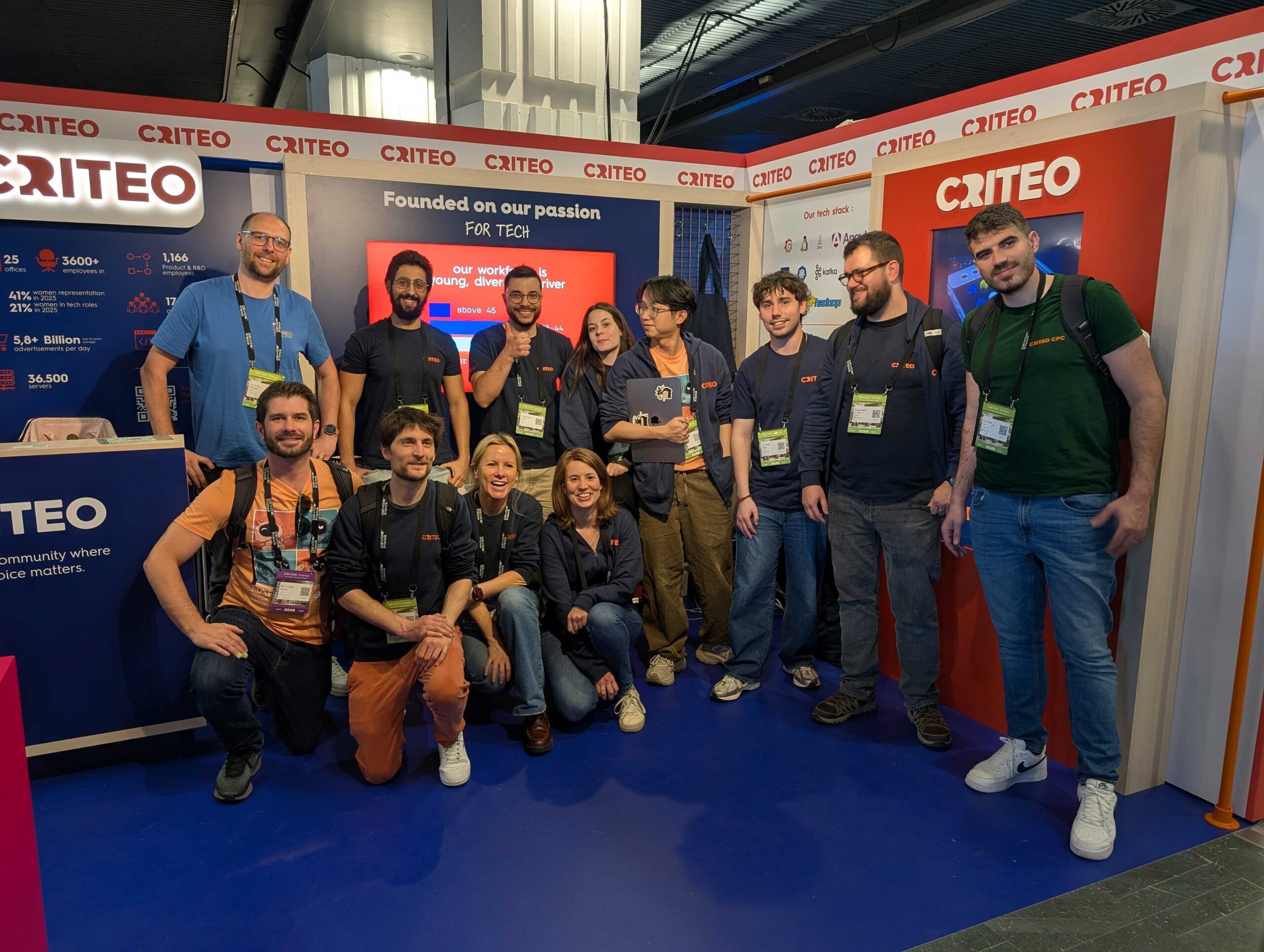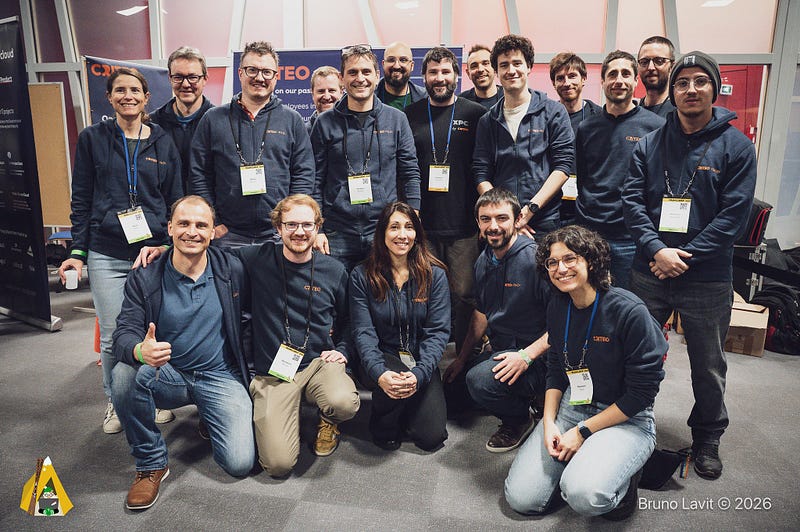















The 2023 edition of Devoxx UK was held at Business Design Centre, London, from May 10 to May 12. This 3-day conference brings together a diverse group of inspiring speakers worldwide to cover the most vital developer-focused topics and latest technology advances and delve into some fascinating ideas.
Devoxx UK is a space for developers to learn, sharpen their skills and get hands-on experience with the latest tech. Our team had the opportunity to meet experts on diverse topics, share knowledge, and learn from other developers.
Criteo’s speaker at DevoxxUK 2023
Before jumping to our takeaways, we want to give a shout out to Henry Lagarde, a speaker in this latest edition. 👏

Henry’s talk was about how web accessibility is a crucial subject to ensure that all users, regardless of their needs or situation, can access and use the content and features of a website equally. This includes people with visual, auditory, motor, or cognitive disabilities and those using assistive devices or technologies. In addition, designing an accessible site can also benefit users who do not have disabilities. 👏
Takeaways from Criteos
We took valuable notes and information on the latest trends and best practices in software development. We’re excited to share our takeaways from DevoxxUK 2023 with you in this article.
Henry’s highlights as speaker and attendance
For the 10th year of Devoxx UK we had the pleasure to have a great quality of talks, exhibitors, and an organiser team that created a wonderful atmosphere and energy!
Each company present had its own unique activity, Coding Cafe by Snyk or Mind Control beer pouring by Redis, is it not great to attend some conference with a pint of beer? The coding cafe organised allows everyone to discover new concepts and apply them by coding directly in the exhibitors’ hall.

The quality of the talks was really high. My favorite was Tech Lead 101 by Vanessa Formicola (you will find more information thanks to @Omid Gosha )explains to you what are the most important parts and how to become a good Tech leader.
Also, as a speaker, I can only thank Devoxx UK for this nice opportunity to be able to raise awareness about accessibility during a “Tools in Action” to create a more inclusive Web. The organisation before and during the conference was perfect to be able to give the best during my talk.
Omid’s favourite topic: Excelling as a Tech Lead – Balancing Roles and Fostering Success
Yesterday, I had the privilege of attending an insightful conference titled “Tech Lead 101,” where the speaker (https://twitter.com/V_Formicola) shared invaluable tips on excelling as a tech lead.

The role of a tech lead extends beyond pure software engineering, requiring the ability to wear multiple hats, resolve conflicts, and support team members. In this article, we will explore the key takeaways from the conference, including practical strategies for sustainable delivery, stakeholder management, and personal growth as a tech lead 👀
- Wearing Multiple Hats
As a tech lead, you must be versatile and proficient in various roles. While technical expertise is vital, it is equally important to recognize that being a tech lead encompasses high-level engineering concerns and the need to provide quality support. Embrace the diverse responsibilities and challenges that come with the role. - Adaptation and Technical Strategy
Each team and individual is unique, and adapting to different personalities and processes is crucial. Develop a technical strategy that aligns with the team’s landscape and future vision. By understanding the current state and visualizing the desired future, you can effectively guide the team toward success. - Conflict Resolution and Diplomacy
Conflicts are inevitable in any team environment. As a tech lead, your ability to resolve conflicts and act as a diplomat is essential. Encourage open communication among team members, actively listen to their concerns, and mediate conflicts constructively. Cultivate an environment where team members feel comfortable sharing their issues and foster a sense of trust and unity. - Embracing the Care Aspect
Being a tech lead involves more than just technical proficiency. Act as a therapist for your team, providing support and guidance. Create a safe space for team members to express their concerns and address their emotional well-being. You can help them achieve mastery, autonomy, and purpose by nurturing their growth and emotional rewards.
How to achieve those previous points? 🤔
- Sustainable Delivery
Strive for consistent delivery rather than perfection at all times. Understand the constraints and limitations, and deliver your best within those boundaries. Consistency builds trust and reliability among stakeholders, ensuring successful outcomes. - Stakeholder Management and Prioritization
Effectively manage stakeholders by understanding their needs, expectations, and priorities. Transparently communicate progress, challenges, and trade-offs. Prioritize tasks based on business goals and the team’s capacity, balancing short-term objectives with long-term vision. - Reflecting Reality
Act as a mirror that reflects the true state of affairs. Objectively assess the project, team dynamics, and individual contributions. Embrace reality, identify areas for improvement, and make informed decisions accordingly. Transparency and self-reflection foster trust and enable effective leadership. - Continuous Growth and Excellence
Strive for personal growth by embracing the mindset of a ballerina. Study, practice, and pursue excellence in your craft. Develop your own voice as a tech lead while cultivating resilience and perseverance. Lead by example, inspiring your team to embrace continuous learning and improvement. - Authenticity and Sincerity
Speak the truth and be sincere, even if it means being disliked at times. Honest and open communication establishes trust and builds stronger relationships within the team. Lead with integrity, maintaining credibility and fostering a culture of transparency. - Habits, Rituals, and Rhythms
Establish productive habits, rituals, and comfort zones that promote efficiency and teamwork. Encourage regular feedback sessions, stand-ups, and retrospectives to foster continuous improvement and keep the team synchronized.
Additional tips from Vanessa 🎤
- You are a role model! Punctuality and reliability are crucial:
As a tech lead, your actions and behaviors set the standard for the team. Being punctual and reliable demonstrates professionalism and instills a sense of discipline and accountability within the team. By consistently showing up on time and meeting deadlines, you inspire your team members to do the same. - There’s always a “dirty corner” and unfinished work; embrace it as a part of the job:
Tech projects are often complex and dynamic, and it’s natural to encounter challenges and areas that require ongoing attention. Acknowledging the existence of unfinished tasks or issues not yet resolved allows you to address them proactively. Embrace the mindset that continuous improvement is a journey, and there will always be opportunities for refinement and growth. - Normalize failure as a learning opportunity and encourage a growth mindset:
In the fast-paced world of technology, failure is inevitable. Rather than fearing or avoiding failure, encourage your team members to view it as a valuable learning experience. Foster a culture that embraces experimentation and encourages taking calculated risks. When failures occur, focus on identifying the lessons learned, iterating on solutions, and growing collectively as a team.
Metrics to gauge Tech Lead management
- Time to code:
Finding dedicated time for coding amidst the responsibilities of a tech lead indicates a well-organized and balanced workload. It suggests that you have effectively delegated tasks and created an environment where you can actively engage in hands-on technical work. A reasonable allocation of time for coding demonstrates that you have managed your responsibilities and supported the team efficiently. - Assess team autonomy and effectiveness when the tech lead is on vacation:
A strong tech lead empowers their team members to work autonomously and make decisions confidently. When you go on vacation or are temporarily unavailable, it is an opportunity to assess the team’s ability to operate independently. If the team can continue to function smoothly and progress without excessive reliance on the tech lead, it indicates a successful delegation of responsibilities and a high level of trust within the team. - The best leadership is invisible:
While it is important for tech leads to provide guidance and support, the ultimate goal is enabling the team to excel independently. The “invisible leadership” metric refers to the ability to foster a self-sufficient and empowered team. When the team members take ownership of their work, collaborate effectively, and produce exceptional results without constant intervention or micromanagement, it signifies effective leadership that has created an environment conducive to growth and success.
By considering these additional tips and metrics, tech leads can further enhance their effectiveness in leading their teams and create an environment that fosters continuous improvement, autonomy, and innovation.
Being a successful tech lead requires a diverse skill set and the ability to balance multiple responsibilities. You can create a thriving work environment by wearing different hats, resolving conflicts diplomatically, and providing care and support to team members.
Pooneh’s notes
Attending Devoxx UK as a participant (not a speaker) was a new experience for me. It was refreshing to sit back and listen to others without constantly thinking about my presentation.
Writing is an essential skill for everyone even developers.
I found one talk, in particular, to be memorable: “Writing for Nerds” by Charles Humble.

The speaker was exceptionally qualified to discuss this topic, having a background in English literature, and I found his presentation to be like a course at university.
Humble began his talk by emphasizing the importance of writing, particularly in the tech world with remote working culture, where effective communication and knowledge-sharing are crucial. Writing helps to build a personal brand, forces them to research and think about areas they may know less about, and promotes clear thinking and problem-solving. However, he acknowledged that writing can also be challenging, requiring practice and dedication.
Humble drew parallels between writing and programming, noting that both require learning through imitation and feedback and developing patterns that you can learn. He encouraged writers to think about their audience before starting, considering what their readers already know and what they need to explain. He also stressed the importance of being clear and concise and respecting the reader’s time.
Before starting to write, Humble suggested making some up-front decisions. For example, writers should consider their capacity to address their readers: are they a reporter, a provider of information, or just an average programmer? They should also decide how much they want to cover and what tense they will use. Finally, it’s important to consider where the work will be published and the publisher’s audience.
Humble then explained the steps to effective writing. Writing a draft is essential, allowing the writer to explore the problem and get their ideas down on paper. The second draft is where the writer begins to think about structure. Humble discussed different patterns and structures, such as the news pyramid or the focus style used by publications like the Wall Street Journal.
In conclusion, Humble’s talk on “Writing for Nerds” was a valuable reminder that writing is an essential skill for everyone, even developers. By following the tips outlined above, we can improve our writing and make it more effective. My takeaways from the talk are that writing, like programming, is a skill that takes practice and feedback to improve and that clear thinking is essential to clear writing.
App Security Automation Made Simple in CI/CD Pipelines
Another talk that truly inspired me was the presentation delivered by Joylynn Kirui, a senior Cloud Security Advocate at Microsoft based in Kenya. Her talk took me on a journey to grasp the importance of integrating security measures throughout the software development life cycle and provided valuable insights on how developers can effectively collaborate with security teams.

The significance of ensuring application security has reached unprecedented levels in today’s world. Joylynn emphasized that developers play a critical role in identifying and addressing security vulnerabilities. However, they often encounter challenges when working alongside security teams.
Historically, there has been friction between developers and security teams, with the latter often perceived as gatekeepers and the former viewing them as obstacles. Besides that, relying on security teams to identify vulnerabilities after developing a minimum viable product (MVP) can lead to significant problems and deployment delays. A collaborative mindset and an approach that integrates security from the outset offer a solution to this challenge.
Another challenge is that many companies prioritize speed over cybersecurity, which can result in potential vulnerabilities. Moreover, developers often lack sufficient training in secure coding, and the ratio of developers to security resources is often imbalanced, increasing the risk of oversight.
Choosing the right tools is the first step. Developers commonly struggle with selecting appropriate security tools for their projects. Joylynn addressed this concern by discussing the automation tools available for application security within the CI/CD pipeline. She offered guidance on choosing the most suitable tools, such as utilizing security plugins in IDEs to identify vulnerabilities during code development. Joylynn also stressed the importance of employing pre-commit hooks, conducting peer reviews, and utilizing code collaboration tools like GitHub Copilot.
Joylynn explained how adopting a “breach mindset” and implementing security measures from the outset can significantly reduce security incidents and minimize the cost of addressing vulnerabilities. Recommended practices include threat modeling, code review, pair programming, and security testing.
Coming from her personal journey as a developer transitioning into cybersecurity, Joylynn emphasized the pivotal role developers can play in building secure code and fostering a security-first culture. The talk encouraged developers to take responsibility for security and offered practical advice on identifying and addressing security vulnerabilities.
A crucial takeaway from the talk is the significance of embedding security practices throughout the software development life cycle. Joylynn outlined key stages — pre-commit, commit, deploy, and operate — and how security can be integrated into each phase. Essential elements such as static application security testing, dependency management, dynamic security scanning, and continuous monitoring are the best approaches to bringing security to our pipelines.
In conclusion, Devoxx UK 2023 was an incredible experience for our team, and we’re excited to share the knowledge and insights we gained from the conferences and networking opportunities with our colleagues and clients.
We appreciate the effort that went into organizing such a large-scale event, kudos to you Devoxx UK organisers! 👏 ❤️ We look forward to attending future editions and hope to continue supporting and contributing to the technology industry’s growth and success.