








An article by Daphnée Bestel, Harold Dost, Khalil Kooli, Thomas Langé & Thibaut Sarion
The global cloud-native developer population has grown by 1 million in the last 12 months, according to the 2021 State of Cloud-Native Development Report developed for CNCF by SlashData. The estimated number of cloud-native developers is about 7.1 million worldwide.
That represents an increase of 51% since 2020.
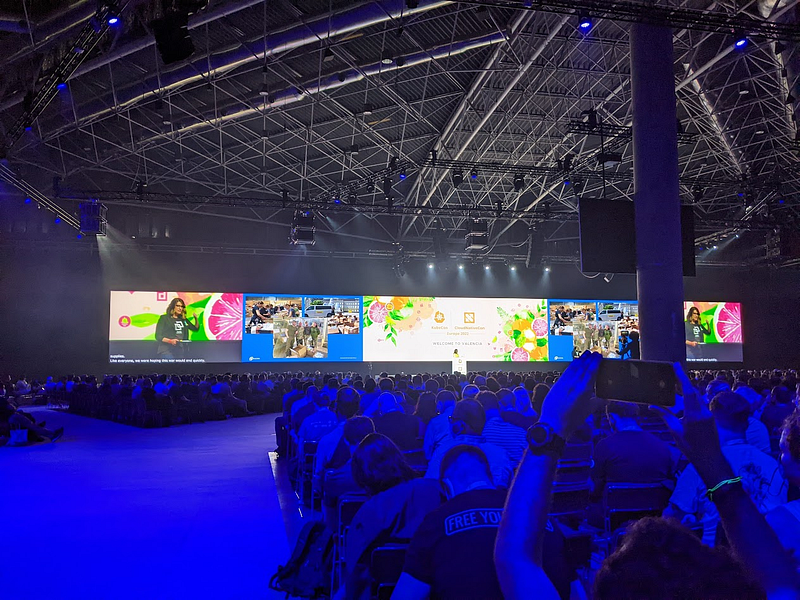
KubeCon + CloudNativeCon Europe 2022 aimed to gather open-source contributors, vendors, and end-users from leading open source and cloud-native communities.
A total of 7,000 on-site and 10,000 online participants attended the hybrid conference. A well-informed audience eager to better understand cloud-native technologies, explore their uses and best practices. On top of this, many were interested in managing their container clusters or reducing energy consumption in data centers with better use of distributed workloads and the development languages used.
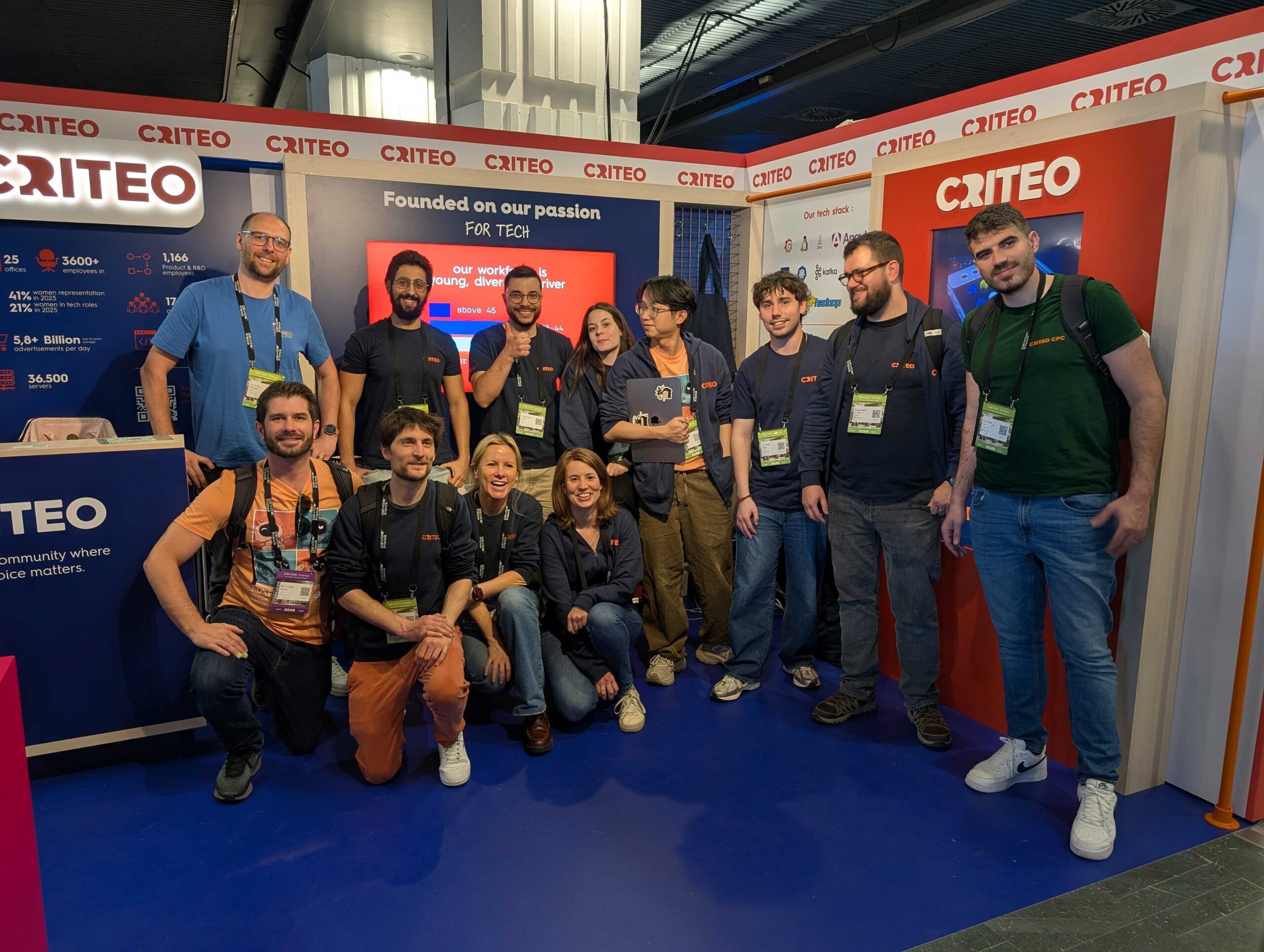
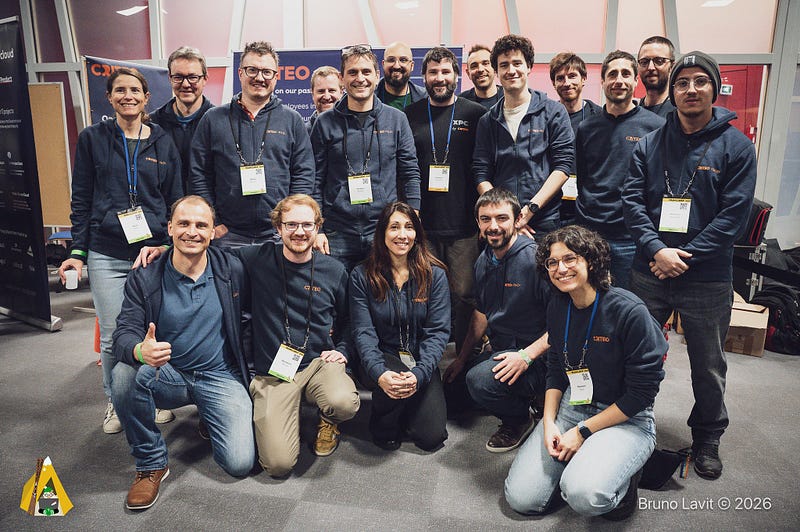
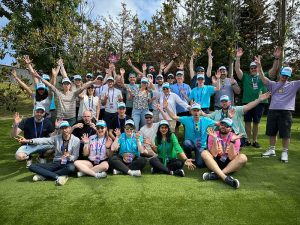
We enjoyed spending 5 days experiencing great conferences, meeting passionate developers, and interacting with exhibitors.
Here is an overview of what each team member took away from their experience at CloudNativeCon EU 2022!
Daphnée’s highlight: The Event Setup
It was our first participation in KubeCon + CloudNativeCon and we particularly enjoyed it:
- The perfect organisation of the event
- The quality of the exchanges with the participants
- The diversity and technicality of the proposed conferences.
Just have a look at the program to picture the choice offered: Schedule | Linux Foundation Events !
KubeCon + CloudNativeCon also stood out with little surprises:
- The wall of ribbons that allows you to display a technology you love, or the fact that the company is looking to recruit
- The wall of job offers — which brings together all the offers made by exhibitors. By the way, if you are interested, our career site is here!
- The wall of stickers allows everyone to customize their badges and computers by displaying their favorite cloud-native technologies
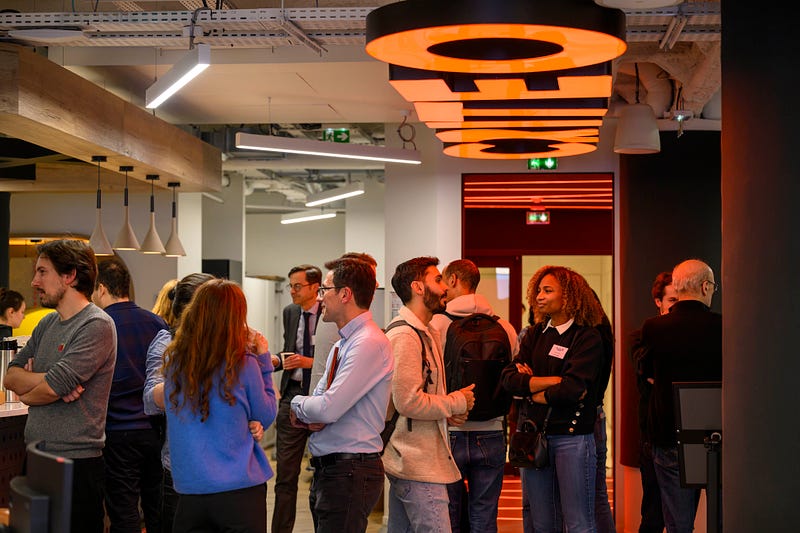
- The Thursday evening party in a vineyard on the outskirts of Valencia. A great networking opportunity. Even transfers to and from the conference venue were provided. An exceptional turn-key evening

Now, let’s dive into some of the presentations we attented!
Thomas’ favourite: Supporting Long-Lived Pods Using a Simple Kubernetes Webhook by Clément Labbe
This was my first time attending KubeCon, and I must admit I was really impressed with the organization and the great mindset during the event (the various stickers to put on your badge to express how open you are to a talk were a great idea by the way!).
This event was a good opportunity to talk with other actors from the Cloud Native industry in the sponsor pavilions; it was particularly interesting for our Container Platform team who runs the Kubernetes platform at Criteo. We could share insights & our roadmap with other companies at the event. I’m happy to come back with a wider professional network and potential cross-company teamwork projects!
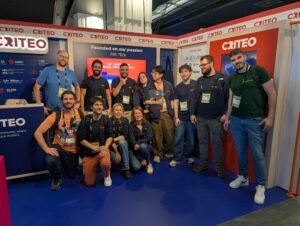
It was enriching to talk with people at our booth as they were interested in learning more about Criteo, and open to discuss our tech stacks and our future challenges. Maybe potential new colleagues?
During the 3 days, there was a vast variety of talks, workshops, and presentations to attend; the ones I could follow were very clear and brought many ideas to my head to dig and brainstorm with the rest of the team when I came back. In particular, Supporting Long-Lived Pods Using a Simple Kubernetes Webhook was really interesting as it echoed some work we plan to do on our side. Context and issues solved by the proposal were crystal clear and the way to solve the problem was nicely described, with inputs to easily set up and try the solution on our side.
Harold’s highlight: Sparse High-Resolution Histograms by Ganesh Vernekar
Visiting CloudNativeCon was a breath of fresh air. I have mostly attended Oracle-based conferences in the past. It was nice to see how thriving a conference can be when focused on Open Source projects.
The Prometheus Dev Summit in person was a great chance to finally meet several contributors whom I’ve had the experience of talking to over GitHub issues or over Slack/IRC/Mailing List. Additionally, attending PrometheusDay provided a lot of good Observability content. However, the talk that excited me the most was about Sparse High-Resolution Histograms as it will pave the way for better quality SLOs and much more easily instrumented applications.
Finally, I enjoyed seeing several great talks about Kubernetes. It allowed me to understand more about how we can grow our Kubernetes footprint and what tools we can use to make Observability work at a Criteo-scale.
Thibaut’s highlight: Operating Prometheus in a Serverless World by Colin Douch
KubeCon + CloundNativeConf was the first event of its kind I ever attended! This has been an amazing week, reconnecting with the community after two years of pandemic !
Whether meeting people on the Criteo booth, or attending cutting-edge talks, KubeCon is the place to foster curiosity around CNCF projects. You can really feel the open source vibes everywhere. People are always keen to discuss topics or issues they’re dealing daily, looking for solutions and ideas. We’re in the same boat, solving issues together through contributing to open source projects.
One good example was the Prometheus project meeting, a whole day spent with the main contributors of the project, speaking about the roadmap, the next steps, and how the community will organize itself around building each piece of it to move forward and make Prometheus always better. It was really surprising to see how quickly engineers from the different landscapes, and different companies were able to find a consensus on discussed topics.
Among the brilliant talks I attended, the one that peaked my curiosity was Operating Prometheus in a Serverless World, exploring solutions to cope with Prometheus architecture (pull model) when it comes to monitor distributed short-lived systems. I also enjoyed a demonstration on how to auto-scale a Kubernetes cluster from monitoring a couple of metrics. Those topics are very aligned with my daily work at Criteo, part of the Observability team.
Khalil’s favourite: Lightning Talks
I started my session journey with lightning talks. One hour, ten speakers, each of them had the freedom to choose the theme of the talk.
Some of them were soft-skills oriented like Why to avoid the term ‘Human error’ in the software industry, or The journey from a student to a K8s maintainer. I particularly liked those talks because I believe that I can learn anything if I have the right state of mind.
I’d be lying if I said I only enjoyed the soft-skills talks because there were a bunch of cool technical talks. I particularly remember the presentation of a tool that helps analyze container images by visualizing the size of container layers. I also loved the live demo of how to debug failures with Linkerd and Telepresence.
Besides the lightning talks, there have been a ton of very interesting sessions, and I had the chance to attend a few of them.
The first one was about design patterns for extensible controllers by Fabrizio Pandini & Rafael Fernández López. As a beginner of Kubernetes, I learned the difference between Controllers and Operators, in a few words, an Operator is a component that runs one or more Controllers to manage a Kubernetes Resource.
I also learned that in order to be able to maintain a scalable Kubernetes platform that hosts a variety of applications, we need to put the right design of Controllers for each use case in a way that we reduce the components we’re maintaining while making sure we can easily debug and evolve our Resources.
During this session, I discovered the notion of API contracts in the Kubernetes Controllers context. Imagine you have a Controller watching related objects, for example, Machine (parent object) and AWSMachine and AzureMachine (child objects). The idea is to define a set of common API fields across all the related objects implementations and once you do that you’ll be able to easily roll out new implementations or switch between existing ones, it sounds very interesting, especially for high scale platforms like Criteo’s.
Another session that I really enjoyed is the practical guide auto-scaling Kubernetes deployments by Natalie Serrino.
Auto-scaling is the dream of every SRE, this session went from defining what is auto-scaling to listing its different types in Kubernetes and it finished by discussing some use cases and the right metrics to use to auto-scale.
Even though the speaker mentioned the Cluster Autoscaler and the VerticalPodAutoScaler, she focused mainly on the HorizontalPodAutoscaler (HPA) which she believes, and I agree, is the more flexible and efficient.
You might deduce it from the name, the HPA scales the number of pods in your deployment, and it does that based on the metrics you’ve selected. The metrics can be built-in like CPU or memory, but also can be user-defined like the latency or the throughput, or even the number of users using your website.
To close, we want to extend a BIG THANK YOU to the organisers. When we first arrived at the Feria Valencia, the personnel warmly welcomed us and smoothly guided us. The vast buildings of the Feria, and the facilities put in place for this event were amazing!
Overall, this event has been very stimulant. We are happy to come back to our team with all those new ideas in mind, and can’t wait try all solutions we’ve been teased with during the several talks we attended over the week.
Last but not least, Valencia is a splendid city, with amazing infrastructure for welcoming such events. What a chance to end the day with the best paella and tapas near the beach!
We want to thank the hard work that was put by the CNCF event team into organizing this enormous conference!
Do you want to join us next year? Check out our open positions!
Careers at Criteo | Criteo jobs
Find opportunities everywhere. Choose your next challenge.
careers.criteo.com
Our jobs which involve Kubernetes at scale:
Senior Site Reliability Engineer in our Infrastructure Team – Lake
careers.criteo.com
Senior Site Reliability Engineer in our Infrastructure Team – Container
careers.criteo.com