








Supporting tech communities should be a cornerstone of the software industry. The digital products we use daily have been created by software engineers who are very passionate about what they build, but especially about how they build it. The Linux kernel is, without a doubt, one of those essential pieces of software that enable the software world around us.
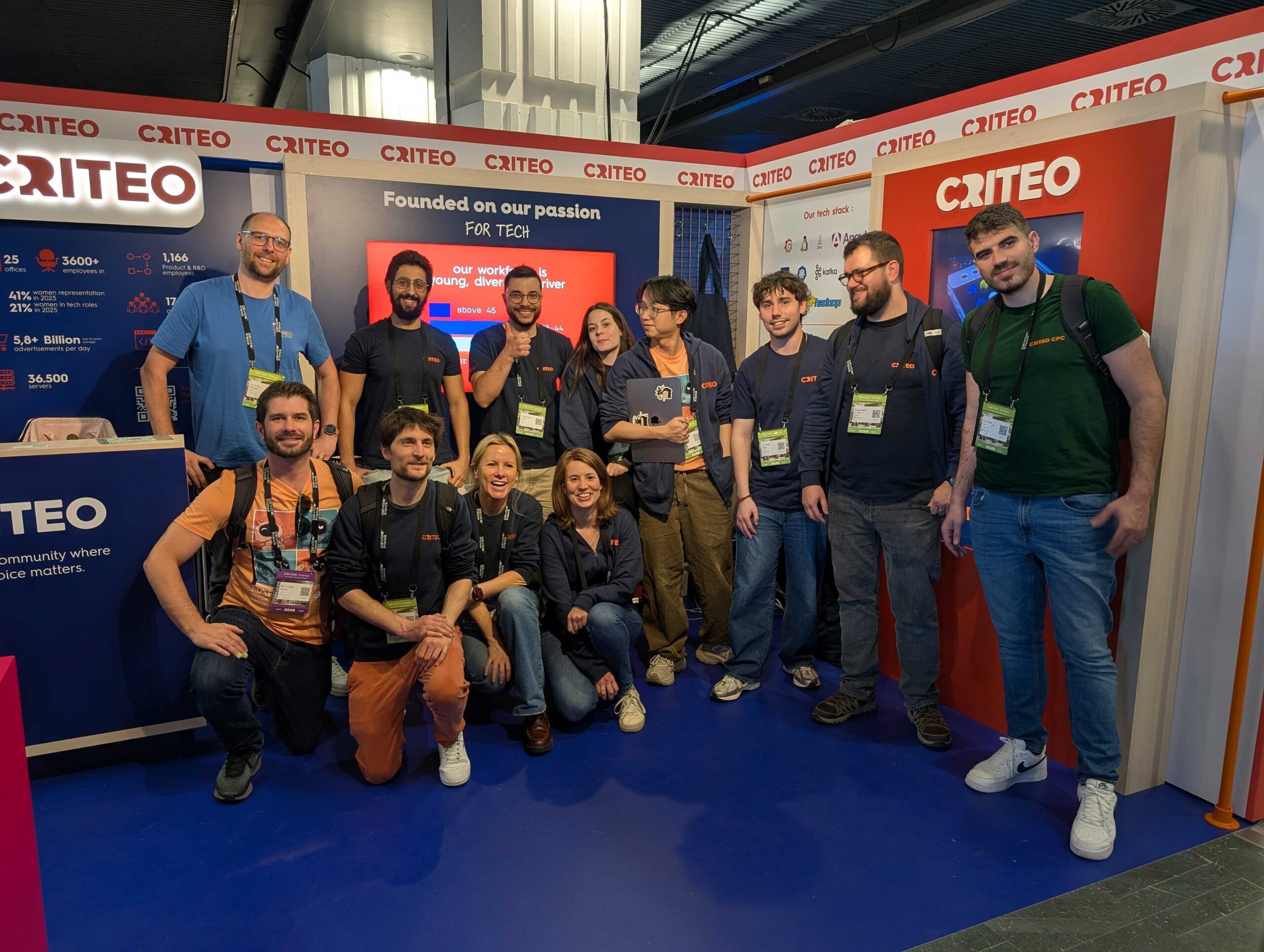
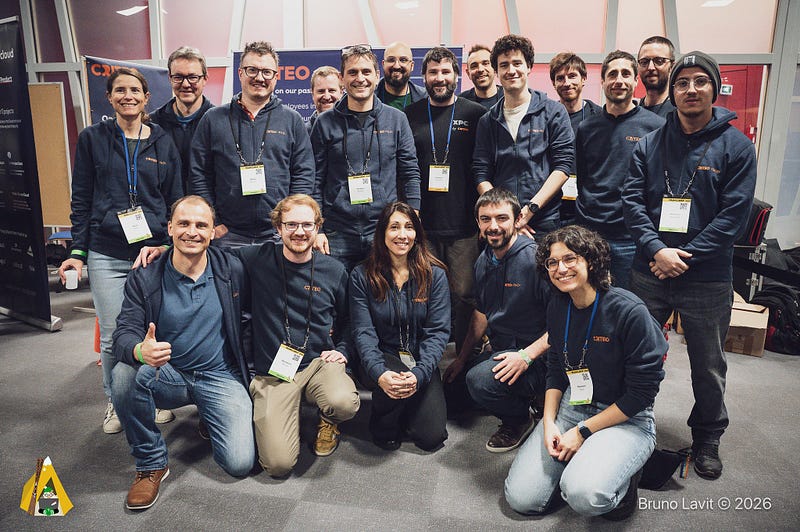
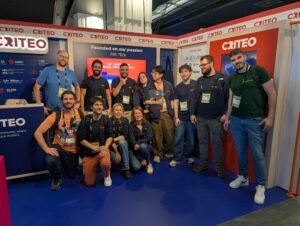
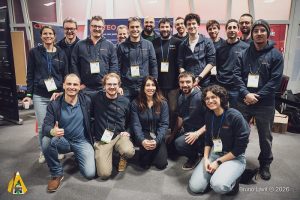
That’s why we sponsored the Kernel Recipes conference for another year and supported this key community. In addition to the sponsorship, we sent a team, and some of our Criteos wrote this recap, sharing some of the insights they gained from the event.
Kernel Recipes 2025 — BPF galore and more — By Matcha
I have a strong dislike for conferences: they’re noisy, busy, you never know where to go for the next talk you want to attend, FOMO takes the best from you and that talk you were hyped about is actually sort of lame. Kernel Recipes is the polar opposite of that: a single track, a single location, breaks frequent enough to still let things sink in, and it never feels like an amusement park got privatized for a LinkedIn seminar.
So, you got it, I love Kernel Recipes. I’m always happy to attend and I’ll happily attend again.
This year, three topics were really catching my attention to the maximum: the graphics/DRI subsystem (with which I’m really unfamiliar, so it piqued my curiosity and sent me into a deep dive), developing for the kernel in Rust (yet another language I want to add to my tool belt !), and using eBPF to customize some of the kernel behaviors regarding memory management, process scheduling and so on.
Highlight talks
Here are a few talks that inspired me.
A Rusty Odyssey: A Timeline of Rust in the DRM subsystem
Maira tells us about the fast-paced arrival of Rust in the graphics subsystem of Linux, more or less started when marcan was frustrated there was bad Apple Silicon support for Linux, and that’s ongoing to this day with more and more things you can do in (memory-safe, expressive, defensive against logic errors) Rust. There is now first-class support for doing more and more things with Rust in the DRM subsystem, including, of course, developing GPU drivers.
A Rusty Odyssey: A Timeline of Rust in the DRM subsystem
The integration of Rust into the Linux Kernel has opened new avenues for enhancing safety and performance, particularly…
kernel-recipes.org
BPFOOM: using eBPF to customize the OOM handling
Roman describes how to leverage BPF to handle out-of-memory situations in the Linux kernel. BPF is an interpreted language (basically a subset of C) that lets you run code in the privileged context of the kernel without having to load a Linux kernel module: the kernel takes care of interpreting or JIT-compiling it when you load it. It lets you redefine or extend certain behaviors, such as process scheduling (talk by Andrea Righi, one of the authors of sched_ext) or in the present situation the dreaded oom-killer. And, see, an oom-killer triggering on a Vertica node can be a real pain to manage, so of course I paid special attention to that talk. In the dire cases where we need to reclaim memory and we’re on a Vertica node, I may benefit from having specific strategies to make decisions a bit different from what the default oom-killer does, going beyond simple oom_adj scores.
BPF is the way forward for extending Linux kernel behaviors and adapting them to our specific workloads: we should probably get more involved with it and know that it’s available when we need to face certain challenges.
BPFOOM: using eBPF to customize the OOM handling
The OOM killer is supposed to save the system from being deadlocked when there is not enough memory to continue the…
kernel-recipes.org
Where does my memory come from?
Lorenzo explains how (in the x86 architecture anyway) memory is allocated, and once you have a basic understanding of that, he tears the veil in front of your eyes and shows you that there’s even more to it, going down to the lower levels of allocations. I deal in real time analytics databases: memory is quite important to us, and understanding what happens when an allocation is requested should let us be craftier and wiser when it comes to defining the system parameters around that, such as thresholds for huge pages, why or why not transparent huge pages and so on.
Where does my memory come from?
This talk provides a deep-ish dive into the APIs the kernel provides to userland to map memory, how they work…
kernel-recipes.org
The gist of it
Kernel Recipes is a great conference, the fact that you don’t get to pick what you will see but see everything is an excellent remedy to your biases and natural inclinations, the speakers are from diverse backgrounds. It’s probably not for everyone, but if you’re technically inclined towards low-level approaches to problem solving (as I am), Kernel Recipes will nurture your curiosity and skills.
Kernel Recipes 2025 — My First Edition — By Thomas
This was my very first Kernel Recipes, and honestly, what an experience!
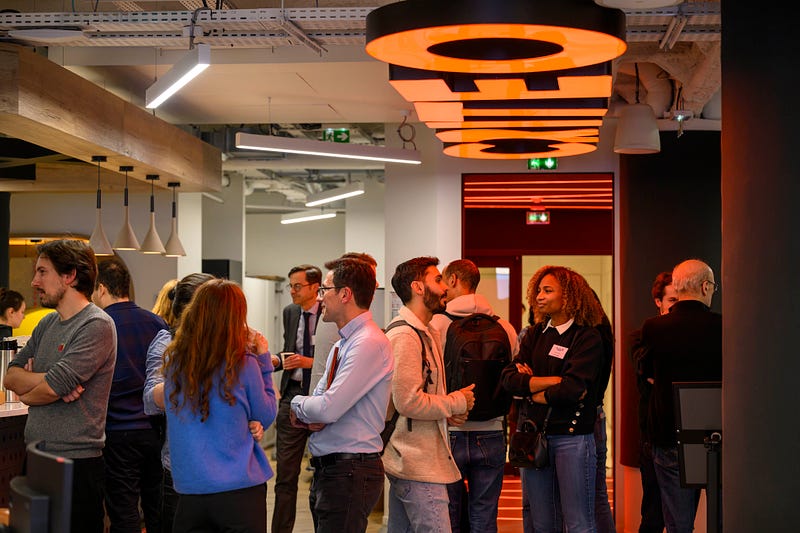
The conference took place in Paris in a great venue, very welcoming and perfectly sized to make it easy to meet people. The vibe was super friendly, lots of hallway chats, people from all kinds of backgrounds (kernel maintainers, researchers, OSS contributors, curious SREs like me 😅).
Even if a good part of the talks went way over my head technically, I really enjoyed the atmosphere, the passion of the speakers, and the diversity of people I got to meet. The social event in the evening (dinner with the other attendees) was also a highlight: lots of insightful conversations, both professional and personal.
Big thanks to the organizers (woot woot @Erwan Velu ) for putting together such a unique and human-sized conference and also to Criteo for giving me the opportunity to attend. I definitely came back with new ideas, and also with more motivation to keep exploring things closer to the kernel world.
Highlight talks
Breaking Up Is Hard To Do
Paul gave a brilliant and also slightly philosophical talk about concurrency and synchronization. His key message was: don’t just add parallelism everywhere; sometimes a simple sequential algorithm wins. He walked through trade-offs (performance vs productivity vs generality) and different approaches like partitioning and replication.
Takeaway for me: a good reminder that complexity is not always the answer. Even in infra/SRE work, sometimes the smartest move is to simplify instead of scaling out more threads/processes/magic.
Breaking Up is Hard to Do
When writing concurrent code, we use locks to protect data. But how do we decide what data is to be protected by which…
kernel-recipes.org
Kworkflow: Mix & Match Kernel Recipes End-to-end
Melissa introduced kworkflow (aka kw), a set of tools to streamline kernel development. She explained it with cooking metaphors (“ingredients”, “mix”, “bake”, “taste”), covering build, test, debug, and patch workflows.
Takeaway: I loved the idea of having standardized, shared workflows instead of everyone reinventing their toolchains. Even if we’re not kernel hackers daily at Criteo, the concept resonates with how we build and maintain infra tools.
Kworkflow: Mix & Match Kernel Recipes End-to-end
The Linux kernel community thrives on shared knowledge. Kworkflow (kw) takes this spirit a step further by providing a…
kernel-recipes.org
The CRA and what it means for us
Greg shared his personal take on the Cyber Resilience Act (CRA), an upcoming EU regulation that affects basically anyone shipping software in the EU. His talk covered what counts as a “Product with Digital Elements,” how responsibilities differ for manufacturers vs open source “stewards,” and why SBOMs (Software Bill of Materials) are going to become unavoidable.
The main point: even if there are carveouts for open source, the CRA will change the way software is consumed and maintained in Europe. Companies will need to be more careful with their dependencies and security fixes, and open source projects will at least need to provide clear security contacts and disclosures.
Takeaway: This one hit closer to home because it’s not just about kernel developers, it’s about all of us in the software industry. Regulations like this will shape the way we consume and deliver software, including in infra/SRE contexts. Also, seeing Greg joking about dealing with lawyers as a kernel dev was worth the ticket alone.
e CRA and what it means for us
With the ratification of the Cyber Resilience Act (CRA) in Europe, there has been a lot of misunderstanding of what…
kernel-recipes.org
Final thoughts
Overall, Kernel Recipes 2025 was a great mix of highly technical talks and very approachable people. I didn’t understand everything, but that’s also the fun part, it pushes you to learn and connect with others.
Thanks again to the organizers for making it such a friendly and unique conference, and to Criteo for letting me attend. First edition for me, but probably not the last… unless my brain still needs to recover from the amount of technical slides it absorbed in just three days 🤯.
You can check the live-blog and the official YouTube channel. Enjoy! 🚀