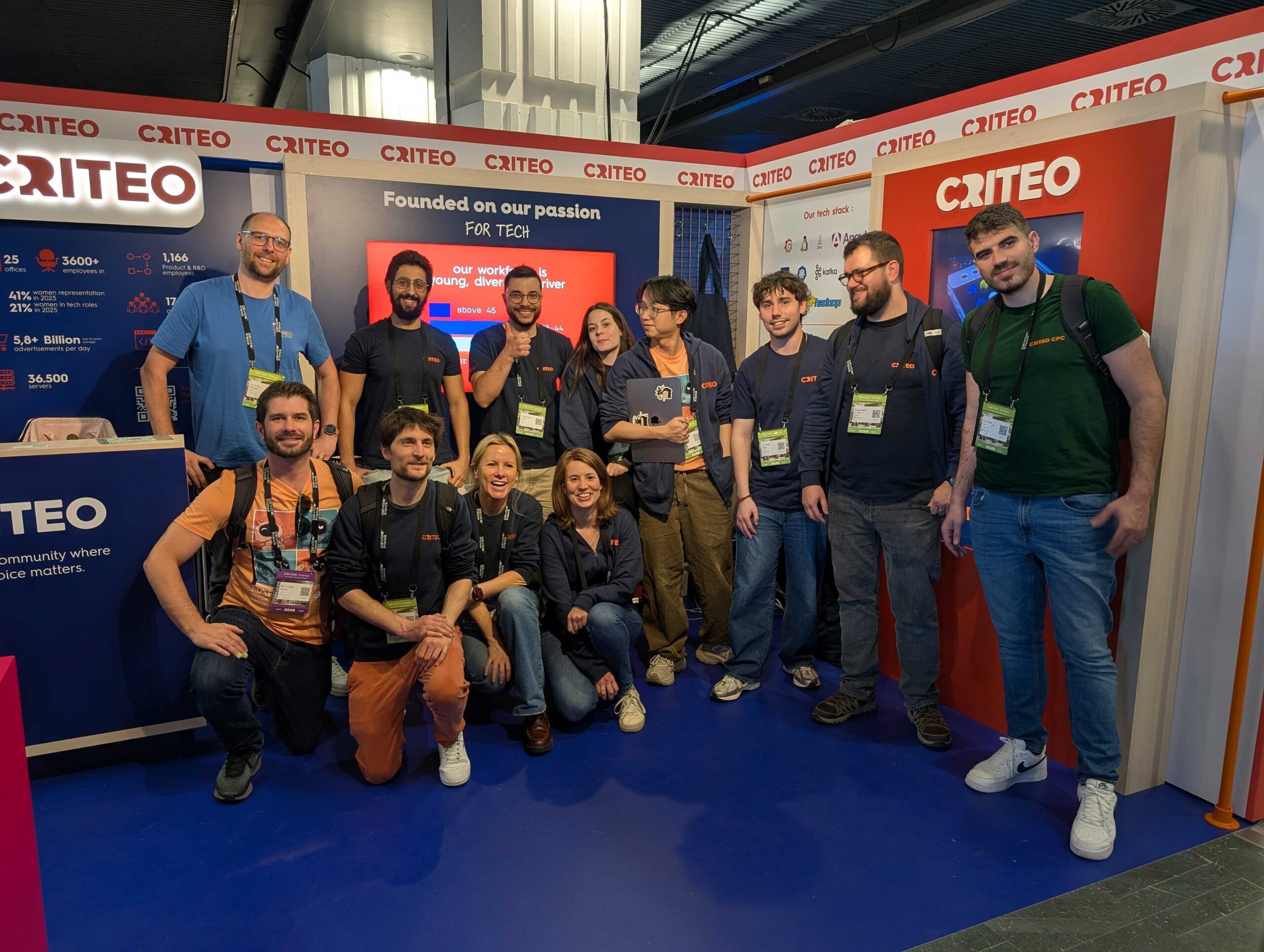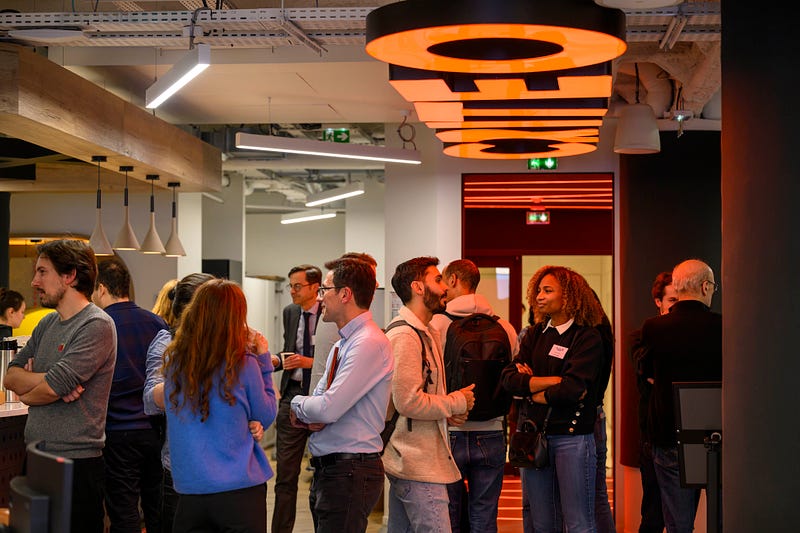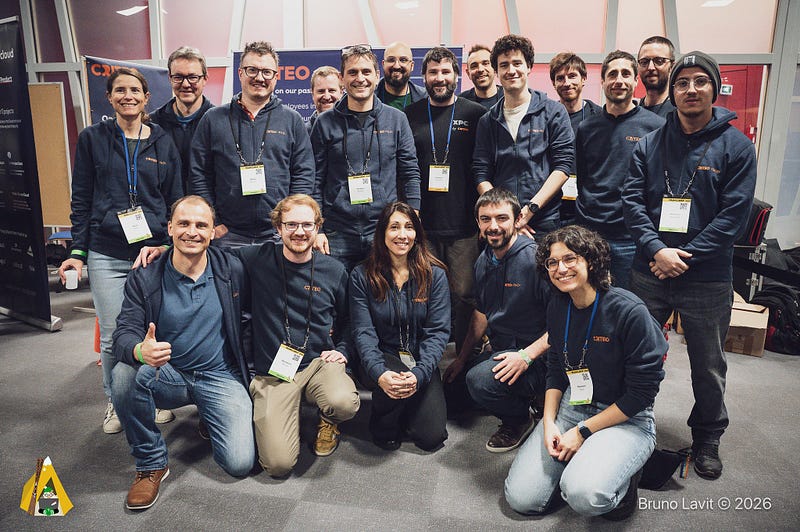


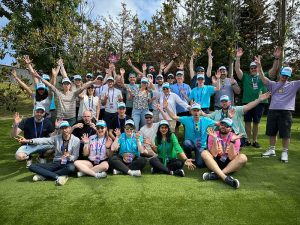






We attended the CloudNord conference on October 10th at EuraTechnologie. If you’re not from the Lille area (or even if you are 😄) take the virtual tour to discover this great place. It’s the largest and older European incubator.
Our takeaways from some of the talks
Should we be afraid of AI? (Manuel Davy, Vekia)
We have been pleasantly surprised by this presentation. It was clear, balanced, and pedagogical.
First, a tentative definition of AI was presented. If an application satisfies three of the following five conditions, it qualifies as an AI application:
- The number and variety of data and information to be taken into account are too great for a human to complete the task in an acceptable timeframe
- False or missing data or information are used
- The relationship between input data and the desired result is not explicitly or completely described
- The expected result cannot be precisely characterized in an easily verifiable way
- All cases cannot be listed and described in advance


Following was a presentation on different types of human intelligence:
- rational and logical
- emotional
- intuitive
- relational
- physical
- …
Conclusion: Human intelligence is much larger than just logical stuff, but artificial intelligence is not able to tackle things that are not rational.
Many people are afraid of job destruction when human activity is replaced by an IA app. The presenter indicated that various studies clearly show that companies using IA smartly create new jobs because the company is more performant overall. But, of course, you’ll always find companies using IA to reduce headcount.
IA is clearly a powerful tool with many applications, but it must be used with positive intent. We also talked about negative aspects of IA, specifically related to environmental damages, because people are not conscious of the impact they have when, for example, they generate a lot of images with MidJourney just for fun.


In conclusion, IA is a great tool that must be used with a clear understanding of its impact and ability. After the talk, we chatted with the presenter about responsibility (who is responsible in case of trouble with the app ?) and the current awful state of the industry, with big actors claiming they want to develop incredible features just to raise more capital.
Ubisoft Talos usage: games servers and serverless platform (by Vincent Behar and Christophe Cantella from Ubisoft)
Ubisoft has been operating and developing its managed Kubernetes clusters since 2018. They transitioned to Talos Linux, a minimalist and immutable Linux distribution specifically designed for Kubernetes, ensuring strong security and operational efficiency.
Christophe Cantella began the session by discussing why Ubisoft chose Talos Linux as the core operating system for their Kubernetes clusters, he also commented on a preregistered demo. He highlighted several key benefits of Talos:
- Talos is built solely for Kubernetes, ensuring that all features remain focused on the specific needs of this container platform.
- API-driven: The talosctl API facilitates automation and simplifies configuration without the need for traditional SSH access.
- Immutable OS: Talos offers a secure, consistent environment with safe updates and no risk of configuration drift.
- Kubespan for multi cloud: Talos enables WireGuard-based secure networking across cloud providers and on-prem infrastructures.


Vincent Behar took over the second part of the presentation, diving into the technicalities of Ubisoft’s hybrid cloud setup. The architecture spans both internal OpenStack environments and AWS, linked by Kubespan for seamless communication across platforms.
Vincent explained how Ubisoft uses Talos to manage this multi-provider Kubernetes cluster, with Cluster API orchestrating deployments. The setup also includes NFS Ganesha and Amazon S3 for handling persistent storage needs.
In the end, they explained the new architecture, they are working on now which is constrained by their hardware asset (very large machines in their own datacenters). They want to build an hybrid platform with all the control planes machines hosted in the cloud and all the workers on prem.


After the talk, we discussed with them and asked what was the motivation behind this move. They explained they wanted to avoid “waste” and not use large machines as the control planes.
Technical tests challenged in the context of technical recruitments: what to do? (by Magali de Labareyre (ovh) and Laurent Grangeau (Google)
They shared insights regarding their experiences with technical assessments in the hiring process, considering both the perspectives of recruiters and candidates.
The discussion included the code review process, which can be time-consuming for both candidates and interviewers. This process may also induce stress for candidates and might not effectively evaluate their skills and thought processes.
Additionally, they addressed platform tests, which have become the predominant method for assessing technical candidates today. However, these tests can disadvantage experienced candidates who may struggle to recall academic information or find that the tests do not accurately reflect the realities of the job. The conversation also touched upon informal peer reviews, which can be beneficial for candidates as they allow for a more directed discussion; however, these reviews tend to be unstructured and may introduce bias.
Furthermore, Magali described a particular team at OVH that employs “Le test de Thomas,” which is a collaborative, whiteboard-style architecture session. In this assessment, candidates are tasked with designing a solution for a specific problem, such as creating a website dedicated to cat videos. This approach offers numerous advantages, including its ability to simulate actual workplace challenges, its engaging nature that candidates often find enjoyable, and its efficiency in the assessment process.

In conclusion, they emphasized the importance of proposing multiple tests rather than just one. These tests should serve as a foundation for discussion and reflection, creating a win-win situation for all involved. It is essential for everyone to invest in their personal branding.
Even though we agree that personal branding is one more skill to add to your toolkit, not everyone might have that specific mindset.
And others …
We also attended a few other presentations, like Security workshop about hacking into a kubernetes cluster by Thibault Lengagne (Padok); It was fun and confirmed we had taken the right path to secure our cluster (pods with high privilege are evil 😃). Also, DependencyTrack by Elisa Degobert :(Hoppr); An interesting talk about DependencyTrack, which is an open-source tool tracking vulnerabilities across all your development repositories.