










In the wake of the AI Action Summit, Criteo organized a symposium on Trustworthy AI labeled as an AI Action Summit event.
As the international AI Action Summit is set to take place in Paris next Feb. 10 & 11, Criteo leveraged this opportunity to contribute to one of the themes of the summit, Trust in AI, and organized on Jan. 21, 2025, its first Trustworthy AI Symposium, as an AI Action Summit-labeled event.
A science-fueled, multidisciplinary approach to Trustworthy AI
At the Criteo AI Lab, we believe that advancing AI responsibly demands a continuous dialogue between scientists, engineers, policymakers, regulators, and industry leaders. As a lab dedicated to AI, we are mindful of the related ethical challenges. To address them in the most effective manner, we contribute to the research community by publishing scientific papers, releasing datasets, and participating to public discussions with regulators and policymakers on AI governance. Organizing the Trustworthy AI Symposium under the label of the Paris AI Action Summit was a natural step in our mission.
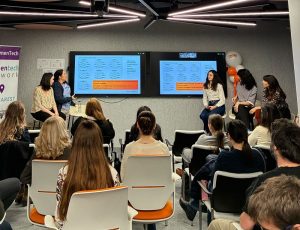
The goal of this symposium was to bring together key stakeholders of the scientific, legal and public policy communities to exchange on what Trustworthy AI means in theory and in practice, in particular in the context of the open Internet. With discussions spanning privacy, fairness, accountability, transparency, and explainability, the symposium fostered meaningful dialogue on the evolving landscape of AI research and governance, including the implications of regulatory frameworks such as the EU AI Act. With a full house of 90 on-site attendees and additional participants online, the event sparked engaging exchanges both during the Q&A sessions, networking breaks and around scientific posters.

The symposium was moderated by Romain Lerallut, Head of Criteo AI Lab, who guided the discussions across critical AI topics. The event opened with remarks by Criteo’s CTO, Diarmuid Gill, who highlighted the company’s vision for responsible AI innovation in the industry.

Highlights
Breaking down the barriers to AI’s future
The symposium opened with a thought-provoking talk by Bertrand Braunschweig, scientific coordinator of the Confiance.ai community, who revisited his seminal concept of “The Five Walls of AI”; Each of the wall correspond to a challenge that could halt AI’s progress if not properly addressed: trustworthiness, energy consumption, cybersecurity, human-computer interaction, and inhumanity. Five years after his initial hypothesis, Braunschweig assessed the progress made and the hurdles still ahead, reinforcing the need for continuous dialogue between AI research and governance.

The intersection of AI and policy
With AI regulation at the forefront of global discussions, Armand Lacombe (French Directorate-General for Enterprise), Marie-Aude Aufaure (Datarvest), Bertrand Braunschweig (Confiance.ai) and Isabelle Landreau (IDEMIA) shared their expertise on how trustworthy AI should be defined and framed, how regulatory frameworks shape industry practices. Gaël Varoquaux (Inria) then reflected on his shift from machine-learning research to AI policy advisory, highlighting how scientific expertise can inform public policy and the broader societal impact of AI.

Trust in AI: privacy, explainability, and fairness
Trust in AI models was a central pillar of the symposium, explored through multiple lenses.
- Privacy. Hugo Richard (Criteo AI Lab) introduced local differential privacy, illustrating how historical data privacy techniques can inform today’s AI privacy strategies. Aurélien Bellet (Inria) followed with an analysis of auditing privacy in machine learning, demonstrating the risks of data leakage in machine learning models and the importance of cryptography-based verification methods.
- Explainability. Eloi Zablocki (Valeo.ai) presented innovative techniques for explaining vision-based driving models, while Matthieu Cord (Sorbonne Université) introduced a dictionary-learning framework for monitoring multimodal LLMs, bringing an academic and industrial perspective on interpreting large AI models.
- Fairness. Mariia Vladimirova (Criteo AI Lab) tackled bias in AI-driven advertising, showcasing Criteo’s FairJob Dataset as a step toward responsible AI in digital advertising. Vianney Perchet (ENSAE & Criteo AI Lab) explored the trade-offs between price, data quality, and fairness in online allocation, underscoring the practical challenges of fair AI deployment.


AI in Practice: from Industry to open Internet
Another important part of the symposium focused on practical AI applications and industry challenges in the Open Internet.
- Real-world AI design. Lyline Lim (PhotoRoom) shared an insider’s view on building and deploying foundation image models, emphasizing the importance of data sourcing, compute scaling, and user feedback in AI model training.
- Awareness of AI-driven risks in online platforms. Oana Goga (Inria) presented her research on AI-driven information micro-targeting risks, touching on political ads and tracking in social networks. Her work not only exposed vulnerabilities in current practices and new investigation methods, but also informed European policymaking.
- Privacy in advertising. Maxime Vono (Criteo AI Lab) discussed AI’s evolution in digital advertising, particularly how AI-driven open Internet systems must adapt to increasing privacy constraints.


Closing reflections: from theory to responsible AI
To conclude the symposium, Mathieu Morgensztern (AdaptivAI) provided a business perspective of responsible AI deployment. His talk addressed the challenges of securing AI models pre- and post-deployment, the importance of employee engagement, and the evolving regulatory landscape.

Scientific posters
Beyond panel discussions, the symposium featured a scientific poster session, where Criteo-affiliated researchers showcased cutting-edge work on privacy-preserving AI, fairness in machine learning, and AI safety. This interactive session fostered collaborations between academia, industry, and policy experts, reinforcing the symposium’s goal of bridging research and real-world AI governance.
For those who want to dive deeper into the topics, the presenters’ slides and poster information are available on our website.


Criteo’s next steps in Trustworthy AI
This symposium is part of a commitment of Criteo to Trustworthy AI, notably via its AI lab, ensuring long-term prospective research on the topic but also enabling its application in the real world. We are delighted and proud to have contributed with this event to the upcoming AI Action Summit by showcasing how the scientific and policy communities can act together towards trust in AI.
As AI continues to evolve, this symposium is just the beginning: you will soon hear from us again for future initiatives and collaborations in the pursuit of an innovative AI ecosystem build on trust. In the meantime, we now look forward to the summit’s scientific and main events, which Criteo will attend and actively participate in — stay tuned!

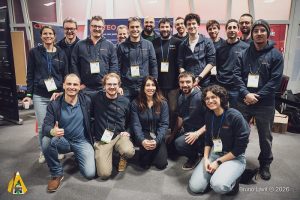
Organizing team
- Marieke Buis, Senior PR & Communication Manager France;
- Joaquín Engelmo Moriche, Staff Developer Relations Engineer;
- Jean-Yves Franceschi, Senior Researcher;
- Nathalie Laneret, VP Government Affairs & Public Policy;
- Dainora Magnier, R&D Support Coordinator;
- Mariia Vladimirova, Senior Researcher.
- Jerome Baudet, Criteo Engineer at Infra & Great photographer